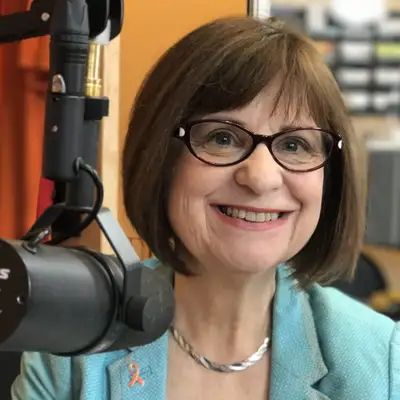
Sandie Morgan Host

Sandie Morgan

Dr. Sandie Morgan is recognized globally for her expertise on combating human trafficking and working to end violence against women. She is the Executive Director of the Global Center for Women and Justice at Vanguard University in Southern California. She is passionate about the role of education in fighting human trafficking. She launched a 12-unit Anti-Human Trafficking Certificate that is totally online. She believes everyone can do something. But first, they need to study the issue. Then they can be a voice and make a difference.

Appears in 379 Episodes

#379

379: What Happens to Women's Rights When There Are No Consequences?

Zahra Nader joins Dr. Sandie Morgan to discuss why, for nearly every five women killed in Afghanistan by their own families, only one man is ever arrested, and how a newsroom of journalists writing under pseudonyms is building the record no one else is keeping. Chapters About Zahra Nader Zahra Nader is the founder and editor-in-chief of Zan Times, a women-led newsroom in exile reporting on human rights violations in Taliban-controlled Afghanistan. She began her journalism career in Kabul in 2011, and in 2016 joined the New York Times bureau there, becoming the first Afghan woman to work with mainstream Western media inside the country. She moved to Canada in 2017 for graduate study and was still a doctoral student in gender and women's studies at York University when the Taliban retook Afghanistan in August 2021. She founded Zan Times in August 2022 with $30,000 she had saved to build a home in Kabul, and now runs it from Edmonton alongside a network of journalists who report from inside Afghanistan under pseudonyms. She briefed the UN Security Council in October 2022, and was a 2024–2025 Knight-Wallace Fellow at the University of Michigan, where she studied sustainable funding models for exiled newsrooms. Key Points • Five years of Afghan women losing basic rights with no international consequence lowers the floor for what can be denied to women anywhere. International law has not prevented it, and that is the precedent that travels. • A newsroom reporting under an authoritarian regime protects people by compartmenting them. Zan Times journalists inside Afghanistan publish under pseudonyms, connect only to an editor, and do not know each other, so one arrest cannot expose the rest. • The Taliban's Code on Judicial Separation of Spouses removes any minimum marriage age. A father or grandfather can give a child into marriage without her consent, at any age. • School was the brake on early marriage, and it is gone. Parents used to defer marriage until a daughter finished school; with girls out of classrooms, Zan Times found families selling one-year-olds and two-year-olds for future marriage to settle debts. • The penalties encode the asymmetry. A man who beats his wife to visible injury, a broken bone, serves 15 days if she can prove it in court. A woman who goes to her parents and refuses to return, along with her parents, serves 3 months. Sandie converts it on air: 90 days against 15. • The 2025 US funding cut closed 445 clinics and hospitals and cut more than 3 million people off from healthcare. Rural women lost the mobile teams that were their only access to a midwife or a blood pressure check. • Restrictions push women out of healthcare even where they are still permitted to work. A Kandahar midwife supporting three children and a paralyzed father paid half her salary to a distant relative to pose as her brother, then stopped going in when the Taliban started asking for ID. • The countermeasure is documentation. Zan Times' femicide investigation across 10 provinces found roughly one arrest for every five women killed by a family member, with deaths certified as suicide despite visible signs of abuse. Subscribing to the newsletter at zantimes.com is the step the episode asks for. Resources • Zan Times • 'When she turns eight they will take her': rising number of Afghan girls being sold into child marriage • 'I don't know how to save my daughter from her husband': the brutal reality of the Taliban's new marriage law • Inside the deadly collapse of maternity care in Afghanistan • 'Her face was beaten in': how Taliban rule ushered in a new era of women being killed • Statement by Zahra Nader at the UN Security Council Open Debate on Women, Peace and Security (NGO Working Group on Women, Peace and Security)
#378

378: What Do You Say to a Teen Who Won't Listen to Warnings?

Cecilia Gonzalez joins Dr. Sandie Morgan to talk about the ten years she spent in an abusive relationship that started at fourteen, and how she now teaches teens to catch the first yellow flag before it happens to them. Chapters About Cecilia Gonzalez Cecilia Gonzalez is the Human Trafficking Prevention Coordinator at Higher Ground Youth and Family Services in Orange County. Her students know her as Ceci. She is part of a team that delivers near peer prevention in local middle and high schools, teaching from lived experience rather than from a textbook, and she builds her presentations around quotes and stories that teens recognize from their own lives. She entered an abusive relationship at fourteen with an older partner and stayed in it for ten years, a decade she now uses to show students how control can arrive disguised as protection. She left at twenty-four, when her oldest daughter was two months old. Today she is raising three daughters, and she talks with students about la tóxica, love bombing, the silent treatment, and the rights every young person has: to feel safe at home, to be a kid, and to be loved in a healthy way. Key Points • Control often arrives in the language of protection, which is why it survives the first look. Ceci's partner came to her soccer practices to walk her home safely, and that became the reason she should stop playing. • The silent treatment is the first flag most teens miss. Someone who cares will have the conversation about what went wrong; withholding it is a punishment, and it shows up long before anything physical does. • An apology that arrives as a gift is one more turn of the cycle. He broke her phone whenever he got angry and replaced it within hours with one her parents could not have afforded, which made the next break easier to absorb. • Time in the wrong relationship is the cost that compounds. Ceci tells students, "If you get on the wrong bus, make sure you get off on the first stop," because she stayed on from fourteen to twenty-four. • Blame does its damage by moving the rules off the record. Once she was reading his face for permission he never had to forbid anything out loud, and she started deciding for herself not to see her friends. • A teen's playlist is a way in, and calling it bad music closes the door. Ceci wanted her mother to ask why she loved the sad, heartbroken songs she played loud enough to get told to turn them down. • Home sets the first model of love, so prevention starts before any relationship does. Ceci grew up without a picture of what affection looks like and assembled one from television, the same gap she now watches teens fill with Euphoria. • Teens act on rights before they act on warning signs. Ceci says the first two skills would have been lost on her at fourteen, but "Hey, Ceci, you have rights" would have landed: the right to feel safe at home, to be a kid, and to be loved in a healthy way. Resources • Higher Ground Youth & Family Services • Higher Ground's Human Trafficking Prevention Program (HTPP) • Global Center for Women and Justice • Safe Communities, Safe Kids (GCWJ, Samueli Foundation grant) • Lil Wayne, "How to Love" (official music video)
#377

377: What Happens to Trafficking Risk When a Hurricane Hits?

Leanne McCallum Desselle joins Dr. Sandie Morgan as they explore what happens when a hurricane knocks out the very systems built to catch trafficking — from a child abuse hotline down for three weeks after Hurricane Ida to the disaster recovery jobs where exploitation quietly takes hold. Chapters About Leanne McCallum Desselle Leanne McCallum Desselle is a Research Analyst and Training & Technical Assistance Provider at RTI International, a role she has held since August 2022. She spent nearly a decade in frontline anti-trafficking work in Louisiana, coordinating the Greater New Orleans Human Trafficking Task Force for more than three years and later managing a statewide child and youth trafficking initiative for the Louisiana Alliance of Children's Advocacy Centers. In 2018 she was appointed Chair of the Labor Trafficking Committee for the Louisiana Governor's Human Trafficking Prevention Commission and Advisory Board. At RTI, she leads technical assistance for a U.S. Office for Victims of Crime initiative on child and youth trafficking outcomes and contributes to research on labor trafficking prosecutions and the effects of disasters on trafficking vulnerability. She holds a Master of Arts in International Studies, concentrating in Human Rights and Human Trafficking, from the University of Denver's Josef Korbel School of Global and Public Affairs, and a Bachelor of Arts in International Relations from Linfield University. Key Points • Hurricane Katrina's Signal International case, in which hundreds of Indian guest workers were defrauded and trafficked into labor repairing Gulf oil rigs, became one of the largest labor trafficking settlements at the time and helped drive Louisiana's first designated federal anti-trafficking funding in 2007-2008. • Housing instability is one of the biggest drivers of post-disaster trafficking risk — when people lose their community, school, and church, they become far more vulnerable to someone who says, "Don't worry, I'll take care of everything. I'll get you a job." • Disasters disproportionately hit communities already made vulnerable by redlining, the historical practice of confining people of color and poor families to lower-lying land that's more exposed to flooding and severe weather. • In interviews with 46 disaster and trafficking responders, foreign national day laborers doing disaster recovery work and isolated children in disrupted households emerged as two of the populations most vulnerable to exploitation after a storm. • After Hurricane Ida, Louisiana's child abuse hotline — the mandated channel for reporting child trafficking — was down for at least three weeks, leaving responders with no way to report what they saw. • Preparation has to happen before a disaster, not during one: without a plan already tested and rehearsed, coordinating a trafficking response becomes nearly impossible once phones, power, and staff are all unreachable at once. • Louisiana responders found creative workarounds under pressure, from standing up a mobile forensic interview unit in a neighboring parish within 24 hours to running child trafficking response operations out of a partner's building after their own offices were destroyed. • Leanne and her RTI colleagues sent their findings directly to the Louisiana Human Trafficking Prevention Commission and Advisory Board, which is now recommending changes to state labor procurement practices to help prevent forced labor. Resources • RTI International • Human Trafficking in the Wake of Natural Disasters (RTI research project page) • Human Trafficking in the Wake of Natural Disasters: A Case Study of Preparedness and Response in Louisiana (Violence and Victims, 2026) • The Intersection of Human Trafficking and Natural Disasters: A Scoping Review (Trauma, Violence, & Abuse, 2024) • Advancing the Field: Human Trafficking and Natural Disasters — Recommendations for the Louisiana Human Trafficking Prevention Commission and Advisory Board • Labor Trafficking in Construction During the Recovery and Reconstruction from a Natural Disaster (OPRE Report, Barrick & Pfeffer) • Louisiana Human Trafficking Prevention Commission and Advisory Board • David, et al. v. Signal International, LLC, et al. (ACLU case page)
#376

376: Why Documents Decide Who Traffickers Can Exploit Next

Dr. Xanthe Scharff joins Dr. Sandie Morgan to explore how displacement, missing documents, and unequal citizenship laws quietly raise the risk of trafficking, and why prevention starts long before a child is ever exploited. Chapters About Dr. Xanthe Scharff Dr. Xanthe Scharff is President and CEO of the Women's Refugee Commission, which she joined in June 2026 after more than two decades spanning humanitarian action, women's rights, journalism, philanthropy, and nonprofit leadership. She previously served as Managing Director for External Affairs and Editor-at-Large at The Freedom Fund, a global collaborative working to end modern slavery, where she helped elevate the work of hundreds of frontline anti-slavery organizations across Asia, Africa, and Latin America. Earlier, she co-founded The Fuller Project, a global newsroom reporting on women, served as Associate Director of the Center for Universal Education at the Brookings Institution, and founded Advancing Girls' Education in Africa. She has raised more than $200 million for social-impact organizations and reported on Syrian refugees in Turkey, with earlier roles at CARE, Save the Children, the United Nations, and the World Bank. Key Points • The Freedom Fund gets money directly to the front lines, granting to almost 200 frontline organizations, and this past year 47% of them were led by survivors. • Birth certificates are a frontline prevention tool: in Bangladesh, mothers believed they couldn't register children without the father's signature, until Freedom Fund's partners socialized a legal provision and registered over 400 children in about six months. • Twenty-four countries still bar mothers from passing citizenship to their children on equal terms with fathers, and Syria's law can leave a returning mother's child stateless and more vulnerable to exploitation. • When people lack legal status, they have no one to report abuse to, and fear of deportation keeps exploited workers silent even when wages are stolen or they are assaulted. • Immigration and refugee are not synonyms; asylum seekers are specifically people seeking protection, a distinction that gets blurred as legal pathways narrow. • Before larger plans, women's groups like Women of the Sun in Gaza and the West Bank made addressing trauma and supporting one another their first priority. • A scholarship alone did not change Anesi's future; without cultural support structures, she left school for marriage after one year and later regretted it, showing that prevention takes more than money. • Xanthe urges the field to listen to survivors: "Alternative livelihood activities in our community is what's going to protect our children," and "we don't need to wait until the children have been trafficked to do an intervention." Resources • Women's Refugee Commission • At What Cost? Women-Led Organizations, Funding Cuts, and the Price of Survival (WRC & Refugees International report) • Global Campaign for Equal Nationality Rights • The Freedom Fund • Refugees International • The Fuller Project • AGE Africa (Advancing Girls' Education in Africa)
#375

375: Is It Ever Ethical to Photograph a Trafficking Survivor?

Nina Alvarez joins Dr. Sandie Morgan to unpack a question raised after The New York Times published images from Figueroa Street: was legal consent enough to prevent harm? Together they explore the ethical duty of care journalists owe survivors, the lasting life of images, and why covering trafficking responsibly takes more than good intentions. Chapters About Nina Alvarez Nina Alvarez is a journalist, documentarian, video photographer, and the CBS Assistant Professor of International Journalism at Columbia Journalism School. She has spent more than twenty-five years reporting breaking news, feature stories, radio reports, broadcast segments, and long-form documentaries around the world. Alvarez began her career at ABC News, working on the documentary series Turning Point before covering the southeast U.S. and Latin America from ABC's Miami Bureau and helping establish the network's Mexico City Bureau in 1997. Her work has aired on World News Tonight with Peter Jennings, Good Morning America, Nightline, and 20/20, earning three national Emmy Awards. Since 2001, she has reported and produced for Univision, NBC, CNN, NPR, MTV News, and Al Jazeera, with work spanning the Middle East, Africa, Central Asia, Latin America, and the Caribbean. She produced, directed, and photographed Very Young Girls, a Showtime documentary following New York City girls who had been sexually exploited and trafficked domestically, and was a producer on the Oscar-nominated Which Way Home. Key Points • Nina Alvarez explains that the ethical duty of care means weighing the lasting impact a story will have on the person in it, since a published story is permanent and the subject may not fully grasp what that means when they agree to participate. • Consent is not the same as a signed release form; Alvarez describes consent as an ongoing process that journalists have to revisit before, during, and after a story is published. • Alvarez points out that turning 18 makes someone legally able to consent, but it doesn't erase the effects of years of trauma, so journalists still have to weigh whether a survivor's "yes" is solid. • Morgan and Alvarez agree that "rescue" is the wrong frame for trafficking recovery, since most survivors leave and return to their situations multiple times before they're fully out. • Alvarez explains that rescue-centered narratives draw more funding and legislative attention toward policing, while recovery-centered approaches that give survivors housing and health resources get less support. • Alvarez says editors should be asking why minors' first names and identifying details were included in a story at all, and whether a survivor understood that their words to police would end up published nationally. • Alvarez encourages organizations to set ground rules with journalists, including reviewing the story and images in advance, and warns that survivors who depend on an organization for access may feel pressure to say yes. • Alvarez reflects that Very Young Girls, made in 2007, didn't anticipate how permanently images would circulate online, and the women in that documentary now say they can never fully escape those images. Resources • Figueroa Street and the Ethical Duty of Care (Columbia Journalism Review) • Very Young Girls (documentary) • GEMS (Girls Educational and Mentoring Services) • Humanitarian Initiative Bridges • Columbia Journalism School
#374

374: How Illicit Massage Parlors Really Launder Their Money

Youngbee Dale joins Dr. Sandie Morgan to explain how traffickers run commercial sexual exploitation as a business, hiding it behind storefronts, shell companies, and cash, and why identifying victims often comes down to asking what they're being charged for. Chapters About Youngbee Dale Youngbee Dale is an anti-trafficking consultant, researcher, trainer, and expert witness whose work focuses on the commercial sex market in the United States, with particular expertise in Asian and Korean sex trafficking, illicit massage businesses, organized crime, money laundering, visa fraud, tax evasion, and financial crime indicators connected to exploitation. As CEO of Dale Consulting, LLC, she trains and consults for law enforcement, prosecutors, financial crime professionals, courts, policymakers, government agencies, and victim service providers. Her clients have included the New York State Human Trafficking Intervention Court Conference, the Association of Certified Financial Crime Specialists, the FBI Southern District of New York, the NYPD Human Trafficking Case Unit, and several state trafficking commissions and task forces. Earlier she served as an NGO liaison to the FBI Norfolk Office and worked with Gonggam Public Law Office in Seoul, Korea. Her peer-reviewed research appears in Dignity: A Journal of Analysis of Exploitation and Violence. She holds an M.A. from Regent University. Key Points • Traffickers treat commercial sexual exploitation as a business model where the goal is profit, so disrupting it means following the money back to the person actually running the operation. • Because anti-trafficking work has centered on victims, there is far less research on the financial crime, immigration fraud, and business structures traffickers rely on to operate. • Networks tend to follow their own cultural business patterns, so Chinese, Korean, and Vietnamese operations launder money and handle payment differently, such as cash-only Chinese parlors versus credit-and-cash Korean ones. • "Know your customer" (KYC) analysis helps investigators recognize trafficking transaction patterns, which look different for domestic minor sex trafficking than for Asian illicit massage businesses tied to grocery stores, real estate, title agencies, or restaurants. • Following cash often means tracing it from the parlor through couriers to a profiteer who deposits it into business accounts or shell corporations, sometimes linked through shared addresses or property owned by family. • The questions that surface exploitation today focus on deductions, hidden fees, fines, wages, and debt bondage, since traffickers have moved past older controls like passport confiscation and forced on-site living. • A South Korean trafficker told Dale that operators fear the Department of Labor more than vice units, because wage and deduction questions can make a woman realize she is being exploited. • Stronger cases require offender-focused research, updated training, forensic accounting, and collaboration among prosecutors, the US attorney, and local law enforcement, who often lack funding for complex financial investigations. Resources • Dale Consulting – Youngbee Dale's consulting firm and primary website. • Money Laundering in the Commercial Sex Market in the United States • Visa Fraud in the Commercial Sex Market in the United States: An Overview • Tax Evasion and Fraud in the United States Sex Market • Beyond Massage Parlors: Exposing the Korean Commercial Sex Market in the United States
#373

373: What Happens to Survivors After They Reach Safety?

Derek Marsh joins Dr. Sandie Morgan to reflect on what they learned inside refugee communities in Greece — where Sudanese survivors of labor trafficking, and mothers rebuilding after violence, reveal how trust, disclosure, and practical support can change what people are able to name, ask for, and access. Chapters About Derek Marsh Derek Marsh is Associate Director of the Global Center for Women and Justice at Vanguard University, where his work centers on education, prevention, and labor trafficking awareness. A longtime collaborator with Dr. Sandie Morgan and a recurring voice on the Ending Human Trafficking Podcast, he helps lead the Global Center's annual study-abroad program in Greece, returning to refugee-serving communities there many times over the years. He came to anti-trafficking work through law enforcement, founding the Orange County Human Trafficking Task Force, and brings that frontline perspective to questions of victim identification and case development. On this trip, his expertise in labor trafficking — and his ability to connect man-to-man with male survivors who are often reluctant to identify themselves as victims — created space for Sudanese refugees to disclose exploitation they had not previously named. Key Points • This year's student group was strikingly independent, and a visit to the Young Diplomat Academy — hosted by Greece's National Human Trafficking Rapporteur — opened the door to a possible future partnership. • For the first time, the team entered a refugee camp in remote Kyllini, where Sudanese men who had been labor trafficked lived three-and-a-half hours from Athens, making access to paperwork and services extremely difficult. • Survivors were hesitant to disclose their trafficking — partly because earlier promises of help had gone unfulfilled — and when they did open up, Derek was struck by how violent and physical their labor trafficking had been. • Having a man speak man-to-man with male survivors lowered their barriers, and they revealed that exploitation was continuing right near the camp, where local actors had quickly learned to target new arrivals. • Greece's EKKA reported 891 identified victims — an admirable number for a nation of under 11 million on the front line of the Mediterranean migration crisis, where authorities must prioritize saving lives before investigating crimes. • At a separate camp for single mothers near Pyrgos, the team hosted a respite event with childcare, art therapy, and resources; the women had walked 45 minutes carrying their children to attend. • A student caring for a three-year-old watched him duck and cover at the sound of a passing plane — a vivid reminder that reaching safety is not enough, and that building resilience is key to a child's recovery. • The closing challenge: you don't need to visit a refugee camp to help — meet displaced people where they are, understand their context, and "look for the handle close to you," whether abroad or in your own community. Resources • Global Center for Women and Justice • Humanitarian Initiative Bridges • A21 • EKKA — National Centre for Social Solidarity (National Referral Mechanism) • Ending Human Trafficking — Episode 371: Dr. Heracles Moskoff
#372

372: How Traffickers Use TikTok the Same Way Brands Do

Christa Wiens joins Dr. Sandie Morgan as they explore why the answer to online exploitation isn't the perfect parental control — it's helping young people recognize manipulation, build critical thinking skills, and know who they can safely turn to when something feels off. About Christa Wiens Christa Wiens is the Executive Director of the Central Valley Justice Coalition, a California-based nonprofit focused on preventing human trafficking through education, outreach, and community collaboration. She has spent over a decade in the anti-trafficking field, beginning her career with the Justice Coalition as an Education Coordinator, where she developed and delivered training programs that reached thousands of youth and adults across the Central Valley. She stepped into the Executive Director role in 2022 and has continued to expand the organization's reach and impact. Christa is the author of the Understanding Human Trafficking series and has contributed to multiple publications on trafficking awareness and prevention. Her work frequently intersects with faith communities, education systems, and local stakeholders, where she advocates for proactive, trauma-informed approaches and stronger preventive frameworks. She holds a Master of Arts in Ministry, Leadership, and Culture from Fresno Pacific Biblical Seminary. Chapters Key Points • Traffickers have adopted the exact same cross-platform influencer model that legitimate brands use — and parents who don't recognize it are missing how exploitation actually operates online. • Looking for the "right app" or "right setting" to protect kids is chasing the wind; what's actually needed are better relational tools for conversation, not better technical controls. • Social media platforms are engineered to maximize engagement, which makes our kids the product — and platforms like TikTok deliberately change what they show users the moment they turn 18. • The most effective protective posture isn't imposing rules but asking open-ended hypothetical questions ("What would you do if...?") so kids see parents as safe, curious allies rather than authorities who will punish them. • Building agency means using the language of "when you make a mistake" rather than "if" — signaling that mistakes are expected, that kids won't be abandoned when they happen, and that they can always come back to a trusted adult. • The driver's permit is a powerful analogy for devices: we don't hand teenagers keys and say "best of luck" — we graduate access gradually, narrate the dangers, and teach them to recognize the red flags, like content that makes them feel big, urgent emotions. • Youth in foster care and system involvement are especially vulnerable online because they often lack a trusted adult — equipping care providers with conversation tools and connecting youth to resources like NCMEC's Take It Down are critical protective steps. • Young people who receive trafficking prevention education report a profound sense of relief — they knew something was off but had no language for it — and once equipped, they become peer educators and advocates in their own communities. Resources • Central Valley Justice Coalition • NCMEC Take It Down • National Center for Missing & Exploited Children • PACT 2025 Reignite Convening
#371

371: Why Strong Trafficking Laws Still Miss Real Victims

Dr. Heracles Moskoff joins Dr. Sandie Morgan to explore what happens after a country builds the laws, shelters, and partnerships meant to protect people — and why outcomes still depend on whether someone, somewhere, recognizes what others overlook. Chapters About Dr. Heracles Moskoff Dr. Heracles Moskoff serves as Secretary General for Vulnerable Persons and Institutional Protection at Greece's Ministry of Migration and Asylum, a role he assumed in July 2023. He previously served as Special Secretary for the Protection of Unaccompanied Minors (2021–2023), overseeing the implementation of Greece's National Guardianship System and frameworks for the accommodation and protection of unaccompanied children. With over two decades of experience in migration policy, human security, and anti-trafficking efforts, Dr. Moskoff has held roles within Greece's Ministry of Foreign Affairs since 2001, including as Expert Counselor on Human Security. In 2013, he was appointed National Rapporteur on Combating Trafficking in Human Beings, coordinating Greece's National Referral Mechanism and National Action Plan (2018–2022). He represents Greece at the EU, United Nations, Council of Europe, and OSCE. He holds a PhD in Sociology from the London School of Economics. Key Points • Most countries have robust anti-trafficking legal frameworks, but the real gap is “national ownership” — the capacity of frontline professionals to recognize indicators when victims do not self-identify. • Faith communities and faith-based NGOs are essential partners because they reach both potential victims and the demand side at an existential level that law enforcement cannot. • Greece's National Emergency Response Mechanism — a 24/7 hotline with mobile units — has helped recover more than 10,000 unaccompanied children over the last five years. • A culture of impunity persists worldwide: only a small percentage of victims are identified and only a small percentage of perpetrators face justice; the identification chain has to extend beyond police to medical, migration, and public administration professionals. • Trafficking is not only the textbook case — the “gray area” of dirty, difficult, dangerous informal work for unaccompanied minors is its own form of exploitation, often tolerated by enforcement. • Consumer demand and corporate supply chains require regulation with real teeth; well-intentioned laws like the California Transparency in Supply Chains Act remain under-enforced, and Greece faces the same gap. • A new presidential decree authorizes new departments dedicated to anti-trafficking and gender-based violence, including planned shelters for male victims and victims of forced labor. • Survivors of forced criminality carry trauma alongside extraordinary resilience; with proper mental health support, integration can produce what Dr. Moskoff calls “a miracle of integration.” Resources • Global Center for Women and Justice • Greece Ministry of Migration and Asylum • Greece National Emergency Response Mechanism (for unaccompanied minors) • EU Pact on Migration and Asylum • United Nations Convention against Transnational Organized Crime • California Transparency in Supply Chains Act
#370

370: Why Mentorship Fails Without Shared Lived Experience

Martha Trujillo joins Dr. Sandie Morgan to ask what changes when communities stop seeing vulnerable youth as problems to be managed and start seeing them as young people in need of support. About Martha Trujillo   Martha Trujillo is the founder of Full Circle Orange County, an organization dedicated to supporting risk-impacted and at-risk students through mentorship, education, and community. Her work is informed by lived experience: she grew up in Orange County and faced significant challenges as a young person, including foster care, gang involvement, expulsion from school, juvenile detention, substance use, and victimization. She now uses her story to guide and empower students facing similar obstacles. Trujillo holds a master’s degree in criminology from UC Irvine and a bachelor’s degree in criminal justice from California State University, Fullerton, and is preparing to pursue a doctorate in education at UC Irvine. Through Full Circle, she practices “diversion through mentorship,” combining workshops, re-entry support, and one-on-one guidance for youth in schools, group homes, and detention centers across Orange County and beyond. Chapters   Key Points   • Full Circle Orange County’s mission is preventing youth incarceration in adulthood by helping kids be identified early as victims rather than written off as criminals. • Martha’s “feeding before teaching” approach — breaking bread with youth before any workshop — builds trust and recognizes the unmet basic needs that often shape kids’ behavior. • Lived experience is one of three pillars (alongside academic training and direct work with youth) that shapes how Martha builds rapport with students no one else has been able to reach. • Early human trafficking prevention should begin between ages 9 and 14, in language that’s age-appropriate but not avoidant — and not reserved only for kids in poverty-stricken environments. • “Dual status” youth (both foster and probation-involved) need support that recognizes them as children first, not as labels — and the juvenile justice system has resources to help them, if we use them well. • Mentors who share appropriate pieces of their own story give kids something to relate to; without that connection, real rapport is rarely possible. • Survivors going through religious rites of passage may be carrying hidden trauma; faith communities have a vital role in trauma-informed prevention conversations. • Coming full circle: Martha was expelled from Nicolas Junior High in eighth grade — and years later returned to receive an honorary promotion certificate alongside its current eighth graders. Resources   • Full Circle Orange County • Know More, Do Better (OC Human Trafficking Task Force) • Global Center for Women and Justice (Vanguard University) • CASA of Orange County
#369

Episode 369: What Should a Nurse Do When a Trafficker Is in the Room

Dr. Sigrid Burruss and Dr. Adrienne Schlatter join Dr. Sandie Morgan to explore what human trafficking actually looks like in healthcare settings, why safety matters more than rushing to the rescue, and how hospitals can build responses that help patients feel seen, supported, and safer -- with a close look at California's new SB 963, requiring emergency departments to screen every patient for trafficking. Chapters Dr. Sigrid Burruss & Dr. Adrienne Schlatter Dr. Sigrid Burruss is a board-certified surgeon at UCI Health specializing in trauma surgery and surgical critical care. She earned her medical degree from the University of California, San Francisco School of Medicine, completed her general surgery residency at UCLA Medical Center, and a fellowship in surgical critical care at UC San Diego Medical Center. Her professional interests include trauma prevention, reducing trauma recidivism, and understanding the relationship between mental health and physical trauma. She is engaged in connecting patients and families with community support systems to promote long-term recovery, and serves on the Orange County Human Trafficking Task Force Healthcare Subcommittee and CSEC steering committee as a leader in clinical response to child sexual exploitation and human trafficking. Dr. Adrienne Schlatter is a board-certified pediatrician at UCI Health, with dual board certification in Pediatrics and Child Abuse Pediatrics. She earned her medical degree from Rowan University School of Osteopathic Medicine, completed her residency in pediatrics at Los Angeles County USC Medical Center, and a fellowship in child abuse pediatrics at the University of Washington School of Medicine. Her clinical work focuses on the care of children who may be affected by abuse or neglect, including evaluation and coordination within multidisciplinary systems. Dr. Schlatter also serves on the Orange County Human Trafficking Task Force Healthcare Subcommittee and CSEC steering committee, bringing her expertise in child abuse pediatrics to the intersection of clinical care, consent law, and trauma-informed practice. Key Points • SB 963, effective January 1, 2025, requires all California emergency departments to screen every patient for human trafficking and adopt formal policies for doing so -- regardless of whether risk factors are present. • Trafficking survivors may come to the ED for reasons that appear unrelated to trafficking: physical assault with an inconsistent history, recurrent STIs, or chronic conditions like hypertension and diabetes that go unmanaged because the trafficker controls whether they can follow up with a primary care provider. • The triage nurse and check-in staff are often the first point of contact -- not the physician -- making it essential that everyone who encounters a patient, from reception to security to cleaning staff, knows what to look for and how to escalate. • When a potential trafficking survivor arrives with a companion claiming to be a family member, clinical policy and common procedures -- like a separate exam, an X-ray, or a trip to the bathroom for a urine sample -- can create a private moment to ask sensitive questions. • The sticker method gives patients a covert way to signal for help: bathroom posters invite patients to place a sticker on their urine cup if they feel unsafe, prompting staff to create a private conversation even when a trafficker is in the room. • Healthcare providers need to manage the impulse to rescue immediately; many survivors, especially teenagers, may not recognize that they are being trafficked, so the goal is to plant a seed of safety -- not to expect immediate disclosure or departure. • Discharge paperwork can carry covert resources: embedding youth housing, counseling services, and hotline numbers in a generic "age-appropriate resources" sheet means a survivor leaves with something useful even if they are not ready to act on it today. • California consent law gives minors over 12 the right to consent to STI testing, mental health care, and substance use counseling without parental permission -- and anyone can consent to forensic evidence collection after sexual assault -- giving clinicians important tools for trauma-informed care without putting young patients at greater risk. Resources SB 963 -- California Hospital Human Trafficking Screening Law https://leginfo.legislature.ca.gov/faces/billNavClient.xhtml?bill_id=202320240SB963 Orange County Human Trafficking Task Force -- Healthcare Subcommittee https://www.ochumantrafficking.com/committees/healthcaresubcommittee Quick Youth Indicators for Trafficking (QYIT) https://resources.rhyttac.org/resources/screening-tool/quick-youth-indicators-trafficking-qyit CSE-IT -- Commercial Sexual Exploitation-Identification Tool https://www.westcoastcc.org/cse-it/ National Human Trafficking Hotline https://humantraffickinghotline.org/en
#368

368: What If the Trafficker Lives Inside the Home?

Zoe Bellatorre joins Dr. Sandie Morgan as they reveal why the most common form of child trafficking never makes the missing persons list — and why the quiet, compliant child sitting in the back of the classroom may be the one hiding the most. Chapters Zoe Bellatorre Zoe Bellatorre is a survivor advocate, trainer, and speaker with over a decade of experience in the anti-trafficking field, specializing in familial trafficking. She holds a Master's in Intercultural Studies with Children at Risk from Fuller Theological Seminary and a Bachelor of Science in Education from Ashland University. Zoe has served as Coordinator of Outreach with The Avery Center and as a Survivor Advocate with CAST LA and Dignity Health, providing crisis intervention within healthcare systems. A recognized subject matter expert, she has consulted with the Office for Victims of Crime Human Trafficking Collective, the National Human Trafficking Training and Technical Assistance Center (NHTTAC), and the U.S. State Department. Her published contributions include essays in the 2021 and 2023 Trafficking in Persons Reports, the 2024 co-authored work on child trafficking misconceptions, and the anthology Medical Perspectives on Human Trafficking in Adolescents. She serves on the advisory council for the Polaris Project's Resilience Fund and on the board of Ride My Road. Key Points Familial trafficking — in which a family member or caregiver is the trafficker or sells the child to a third party — accounts for 60% of child trafficking cases, making it the most common form of exploitation, yet it remains the most overlooked. Unlike pimp-controlled trafficking, children trafficked by family rarely go missing; they may attend school daily, making the conventional "missing child" framework nearly useless for identifying them. The average age of entry into familial trafficking is four years old — years before most prevention education ever reaches a child — which means abuse becomes normalized long before anyone thinks to intervene. Indicators for familial trafficking look very different from other forms: rather than acting out, these children tend to be unusually quiet, compliant, and eager to please adults, driven by fear of any attention being drawn back to the home. Children in familial trafficking rarely disclose, and when they do, they are often not believed — after one or two failed attempts, most simply stop trying, leaving them isolated with the false belief that no one else experiences what they are living through. 35% of familial trafficking cases are generational, meaning the cycle has repeated across mothers, grandmothers, and siblings — making family members who witnessed it less likely to intervene and more likely to look the other way. The "stranger danger" framework has been one of the most damaging concepts in child protection, because it trains communities to look outward for threats while the exploitation happening inside trusted homes, families, and institutions goes unseen. Research shows that a single trusted adult in a child's life significantly increases the likelihood of earlier disclosure or prevention altogether — meaning every person in a community has a concrete role to play, regardless of their profession. Resources Ending Human Trafficking Podcast EHT Episode 278 – Identifying and Interacting with Minor Victims of Human Trafficking, with Dr. Jodi Quas EHT Episode 353 – Grooming in Trusted Spaces: A Conversation with Dr. Beth Lorance Trafficking in Persons Report – U.S. Department of State Medical Perspectives on Human Trafficking in Adolescents: A Case-Based Guide
#367

367: Stop Reacting to Events and Start Preparing

Ray Bercini and Sara Elander join Dr. Sandie Morgan to explore what's really at stake when a city like Los Angeles hosts the World Cup — and why the biggest trafficking risk might not be what you think. Chapters Ray Bercini and Sara Elander Ray Bercini serves as Task Force Coordinator and Law Enforcement Liaison at Saving Innocence. With 31 years at the Los Angeles County Sheriff's Department — including six years dedicated to human trafficking work — Ray brings deep cross-sector expertise to the intersection of law enforcement and victim services. He has been instrumental in building the LA Regional Human Trafficking Task Force into one of the largest co-located task forces in the nation, and has played a key role in preparing Los Angeles for major events including the Super Bowl, FIFA World Cup, and LA28 Olympics. Sara Elander is Director of Programs at Saving Innocence and Victim Service Coordinator for the LA Regional Human Trafficking Task Force. With over six years of experience in program management and trauma-informed care, Sara leads a team of crisis case managers and oversees survivor-centered services across LA County. She holds a Bachelor of Arts in Community Advocacy and Social Policy from Arizona State University and is committed to healing-centered approaches that empower survivors toward long-term recovery and stability. Key Points The widely repeated claim that major sporting events dramatically spike sex trafficking lacks supporting data — but the absence of proof isn't proof of absence, and LA is launching a research study around FIFA to finally generate real, local data. Labor trafficking is the more evidence-based concern around large-scale events, with exploitation rising sharply in the lead-up to events through construction, hospitality, and vendor supply chains. The LA Regional Human Trafficking Task Force launched a Sports and Major Events Committee with roughly 30 members and six subcommittees, designed as a legacy infrastructure that can serve future events beyond just FIFA. Coordinating tips during a major international event is a complex, unsolved challenge — multiple agencies including FBI, HSI, LAPD, and LASD will all have tip lines, and the team is working to centralize reporting without losing coverage. One of the most important lessons from the 2022 Super Bowl was that outside organizations parachuting in with good intentions — but without coordination — can undermine local trust and misdirect survivors away from local resources. Effective multi-agency collaboration requires every organization to clearly define what they uniquely bring to the table, stay in their lane, and go through a vetting process before engaging in high-stakes response work. Sara's definition of success after FIFA centers on community empowerment — if hospitality workers, transportation staff, and community members leave better equipped to identify and report trafficking indicators, that's a lasting win. Ray's measure of success is straightforward: survivors of all forms of trafficking — sex and labor — are identified, connected to resources, and treated with dignity, which no single agency can accomplish alone. Resources Saving Innocence LA Regional Human Trafficking Task Force National Human Trafficking Hotline Compass Connections Blue Campaign LA Regional Crime Stoppers Global Center for Women and Justice Ending Human Trafficking Podcast
#366

366: Why Information Alone Will Never Protect Young People

Dr. Nanyamka Redmond joins guest host Ruthi Hanchett as they explore how everyday adults — parents, teachers, coaches, and neighbors — can become a powerful protective factor in young people's lives by building the kinds of relationships that help youth thrive and navigate risk. Chapters Dr. Nanyamka Redmond Dr. Nanyamka Redmond is a Research Scientist at the Search Institute, a nationally recognized organization dedicated to advancing research and practical frameworks that help young people thrive. She holds a PhD in Applied Developmental Psychology from Fuller Theological Seminary and a Master's Degree in Clinical Psychology, Marriage and Family Therapy from Azusa Pacific University. Her work focuses on developmental relationships, youth resilience, and advancing equitable, relationship-centered approaches to youth development and wellbeing. Dr. Redmond specializes in translating developmental science into practical tools for educators, families, youth-serving professionals, and community organizations, emphasizing culturally responsive and strengths-based approaches that center young people's lived experiences. She has also served as Director of School Partnership for Character Lab, co-founded by Angela Duckworth, and is a keynote speaker at the Global Center for Women and Justice's Ensure Justice Conference. Key Points An anti-trafficking program can teach warning signs, but it cannot replace a caring adult — if a young person doesn't feel seen, safe, and valued, information alone won't protect them. The Search Institute's 40 Developmental Assets framework identifies a combination of internal strengths and external supports that young people need to thrive, and research consistently shows that the more assets a young person has, the better their outcomes. Developmental relationships go beyond good relationships — they are defined by five specific elements (express care, challenge growth, provide support, share power, and expand possibilities) that research has shown to directly impact positive youth outcomes and reduce risk. For youth who have experienced trauma, relationships have often been transactional or harmful, so the experience of someone who cares without strings attached can be surprising — which is why consistency and small, repeated moments of connection matter more than grand gestures. Belonging is not just a buzzword — when adults work to help every young person feel genuinely seen and valued in the spaces meant for them, it builds the sense of dignity that serves as a foundation for resilience. Sharing power with young people doesn't mean abandoning guidance; it means entering those relationships with a frame that sees adolescence as an age of opportunity rather than a period of storm and stress. Resilience is relational — it is not something young people build alone, but something that grows when multiple caring adults across their ecosystem show up consistently over time. Adults who want to support youth leadership can start with incremental steps: invite young people to co-create the questions, let them lead the conversation, and hold the barriers gently without squashing the vision. Resources Search Institute The 40 Developmental Assets Framework Global Center for Women and Justice Ending Human Trafficking Podcast Age of Opportunity: Lessons from the New Science of Adolescence by Laurence Steinberg
#365

365: What 25 Years of Sweden's Sex Purchase Act Revealed

Anna-Carin Svensson joins Dr. Sandie Morgan as they explore how Sweden's decision to punish buyers instead of victims has reshaped who feels safe coming forward — and how that same principle is now being applied to hold online exploitation accountable. Chapters Anna-Carin Svensson Anna-Carin Svensson serves as Sweden's Ambassador to Combat Trafficking in Persons, representing Sweden in multilateral anti-trafficking efforts including at the United Nations. In this role, she has participated in high-level discussions related to the appraisal of the UN Global Plan of Action to Combat Trafficking in Persons, including the side event "Proactive by Design: Leveraging Multidisciplinary Collaboration and Digital Innovation to Prevent Human Trafficking." Previously, Svensson served as Director-General for International Affairs at the Swedish Ministry of Justice, where she led Swedish delegations in international human rights forums and oversaw Sweden's implementation of international legal obligations, including under the Convention against Torture. Across her career, she has consistently emphasized state responsibility, institutional accountability, cross-government coordination, and the importance of translating legislation into effective practice. Key Points Sweden's Sex Purchase Act, introduced in 1999, was a landmark legal shift that criminalized the buyer of sexual services rather than the seller, placing the state firmly on the side of the more vulnerable party in the transaction and signaling that prostitution is a harm to all of society — not just to the individual. A 2010 official evaluation of the law found measurable results: street prostitution decreased, criminal networks were deterred from establishing trafficking operations in Sweden, and public attitudes shifted significantly — evidence that law can have both a direct and a normative effect. As exploitation moved online, Sweden updated its legislation in 2025 to extend the same principle into the digital space, criminalizing the purchase of live, on-demand sexual acts performed remotely — because if something is illegal offline, it must be illegal online. Many victims who had been coerced into performing live cam shows said the new law would have made it easier for them to refuse, illustrating how legal frameworks can shift power back to the exploited person even before a crime is prosecuted. Correct application of the law matters as much as the law itself — broad training across all professions, not just specialized units, is essential so that any first responder can recognize a victim, give an appropriate initial response, and connect them to the right support. Multidisciplinary collaboration is not optional: criminal justice, social services, civil society, health professionals, schools, and international partners must all work in concert, because victims often feel safer disclosing to a social worker or nonprofit than to law enforcement, and that trust must be honored. Digital literacy and healthy relationship education must begin before exploitation happens — teaching young people to recognize manipulation, loverboy tactics, and online red flags is one of the most important prevention investments a society can make. Hope lies in the growing global community of organizations and individuals bringing creative, collaborative solutions to every aspect of this problem — and in the simple recognition that for every challenge, there are many possible answers. Resources Ending Human Trafficking Podcast Global Center for Women and Justice (GCWJ) UN Global Plan of Action to Combat Trafficking in Persons – 2025 Appraisal Sweden's Sex Purchase Act – Swedish Gender Equality Agency Sweden's 2025 Online Sexual Acts Legislation – Library of Congress Summary Transcript
#364

364: Are Our Systems Adapting as Fast as Traffickers Are?

Dr. Kari Johnstone joins Dr. Sandie Morgan as they discuss how traffickers adapt fast, moving money, victims, and exploitation through digital systems most of us interact with every day, examining whether our institutions are adapting fast enough to protect victims without them risking everything to testify. Dr. Kari Johnstone Dr. Kari Johnstone is the OSCE Special Representative and Co-ordinator for Combating Trafficking in Human Beings, representing the Organization for Security and Co-operation in Europe at the political level on human trafficking issues and coordinating anti-trafficking efforts across the OSCE region. Before joining the OSCE, Dr. Johnstone spent nearly a decade (2014-2023) as Senior Official, Acting Director, and Principal Deputy Director of the U.S. Department of State's Office to Monitor and Combat Trafficking in Persons (J/TIP), where she advised senior leadership on global trafficking policy and programming and oversaw the annual Trafficking in Persons Report. Her extensive U.S. government service also includes senior roles in the Bureau of Democracy, Human Rights, and Labor. Dr. Johnstone holds a B.A. from the University of Michigan and a Ph.D. in Political Science from the University of California, Berkeley. Key Points The OSCE survey revealed a 17-fold increase in forced criminality cases over five years across the 57 member states, making it the fastest growing form of human trafficking globally. Forced scamming, which originated in Southeast Asia, is now being exported to other regions as criminals adopt this lucrative business model that exploits victims with brutal tactics to defraud others. Technology and artificial intelligence present both challenges and opportunities in combating trafficking, allowing law enforcement to process data more quickly to find victims and perpetrators while also being misused by traffickers for recruitment and exploitation. Financial intelligence and following the money can supplement or even replace victim testimony in prosecutions, reducing the burden on survivors and providing effective pathways to convict traffickers. The non-punishment principle remains woefully inadequate in practice worldwide, with victims often arrested, prosecuted, and convicted for crimes directly related to their trafficking experience, creating lifelong consequences that prevent access to housing, employment, and stability. The United States leads globally on criminal record relief for trafficking survivors, with 48-49 states having vacature or expungement laws and new federal legislation (Trafficking Survivor Relief Act) awaiting presidential signature, though much work remains worldwide. Victim assistance must be unlinked from the criminal justice process, allowing survivors to receive care and services first before deciding whether to cooperate with law enforcement, which actually increases the likelihood they will come forward and participate. The demographics of trafficking victims are shifting beyond stereotypes, with forced scamming targeting educated individuals with IT and language skills, while forced criminality increasingly exploits younger children, including those under age 10, for drug-related crimes and violence. Resources Organization for Security and Co-operation in Europe (OSCE) OSCE Office of the Special Representative and Co-ordinator for Combating Trafficking in Human Beings Protocol to Prevent, Suppress and Punish Trafficking in Persons (UN Palermo Protocol) UN Global Plan of Action to Combat Trafficking in Persons U.S. State Department Office to Monitor and Combat Trafficking in Persons Trafficking in Persons Report Trafficking Survivors Relief Act Ending Human Trafficking Podcast
#363

363: The Hidden Link Between Romance Scams and Forced Labor

Matthew Friedman joins Dr. Sandie Morgan as they explore how pig butchering scams work, why they're so effective, and how they're tied to forced labor and human trafficking, while explaining what prevention can look like from personal red flags to safeguards in financial systems. Matthew Friedman Matthew Friedman is the Founder and CEO of The Mekong Club, a pioneering organization that mobilizes the private sector to fight modern slavery across Asia. A globally recognized expert on human trafficking, Friedman has spent over three decades working at the intersection of business, government, and humanitarian action to combat exploitation and promote ethical leadership. Before founding The Mekong Club, Friedman served as Regional Project Manager for the United Nations International Project on Human Trafficking (UNIAP/UNDP), overseeing a six-country initiative spanning China, Cambodia, Laos, Myanmar, Vietnam, and Thailand. He also served as Deputy Director for the USAID Office of Public Health (Asia Region), managing a $100 million annual portfolio. Friedman holds a Master's degree in Health Education from New York University and is a renowned keynote speaker who has delivered more than 900 presentations in 20 countries, inspiring individuals and organizations to take a stand in the fight against modern slavery. Key Points Pig butchering scams are sophisticated romance scams where criminals build trust over weeks before convincing victims to invest life savings in fake cryptocurrency schemes, with the metaphor referring to "fattening the pig before the slaughter." An estimated 300,000 to 400,000 young professionals have been trafficked into scam centers across Southeast Asia, where they are forced under extreme violence and coercion to run online scams targeting victims in wealthy nations. The Prince Group sanctions marked one of the most significant global crackdowns on forced-labor scam centers, with the UK freezing real estate assets and the US freezing $15 billion in cryptocurrency, signaling increased international cooperation. Financial institutions can help prevent pig butchering by monitoring unusual withdrawal patterns, such as when customers who haven't touched their accounts for 30 years suddenly liquidate everything, and by contacting clients before large transfers are completed. Victims in scam centers face brutal violence including being tasered, beaten, and in some cases tortured to death with videos sold as "hardcore" content, creating a level of violence unprecedented in modern slavery according to Friedman's 35 years of experience. Only 0.2% of the 50 million people in modern slavery receive assistance globally, not because counter-trafficking organizations don't care, but because the $236 billion generated by criminals vastly outweighs the $400 million available to fight it. Public education and awareness are critical for prevention, as people in North America remain largely unaware of pig butchering scams while Asian communities have become more informed through widespread media coverage and victim testimonies. The Mekong Club has developed multilingual e-learning tools including a three-and-a-half-minute video to help raise awareness about both human trafficking into scam centers and the scams themselves, emphasizing that prevention must be widespread. Resources The Mekong Club The Mekong Club - Tools & Resources Valid8 Financial Ending Human Trafficking Podcast - Episode 269 Matthew Friedman on LinkedIn Contact Matthew Friedman Ending Human Trafficking Website
#362

362 – Before Teens Hide Online, Youth Pastors Must Build Trust

Brenton Fessler joins Dr. Sandie Morgan as they explore why teenagers aren't hiding their digital lives because they're rebellious—they're hiding because they don't feel safe talking, and what trusted adults do next can change everything. Brenton Fessler Brenton Fessler is the Lead Pastor of Refuge OC Church in Orange County, California, where he provides vision and leadership for a growing faith community with a strong emphasis on family, discipleship, and community responsibility. With a background in youth ministry and ministry education, Brenton brings deep experience working with adolescents, parents, and church leaders navigating the complexities of formation, trust, and safety in a digital age. In addition to his pastoral leadership, Brenton has taught ministry-related courses and mentored emerging youth pastors, equipping them to build relationally healthy, developmentally appropriate, and ethically grounded ministry environments. As a parent of teenagers himself, he offers a practical, lived perspective on the challenges families face around technology, online identity formation, and risk exposure. Brenton's work reflects a prevention-first, relational approach rooted in grace, accountability, and collaboration between parents, churches, and broader community systems. Key Points Youth pastors hold a unique position of trust with teenagers, making them critical partners in digital safety conversations, as students often confide in them before approaching parents about risky online behavior. The scaffolding metaphor illustrates healthy digital boundaries—parents and church leaders provide temporary support structures that can be removed as young people demonstrate increasing responsibility, rather than permanent fences. When a 14-year-old discloses risky online behavior, youth pastors should offer to walk alongside them in conversations with parents rather than protecting confidentiality at all costs, because these young people need adult guidance to navigate complex situations safely. Youth ministry should focus on spiritual formation and relationship building rather than behavior modification, creating environments where students feel safe to make mistakes and receive grace while learning to live righteously. Churches need to update child protection policies to include digital and virtual environments with the same rigor as physical spaces, including background checks that examine volunteers' online presence and social media activity. Youth pastors serve as cultural missionaries within church staffs, helping senior pastors understand emerging technologies, social media platforms, and the realities of youth culture that shape the next generation's spiritual development. The "talk tech every day" initiative from Ensure Justice emphasizes that digital safety conversations must be ongoing and integrated into daily family life, not reactive responses to scary news articles. Building cross-generational trust requires two-way mentoring where students teach adults about technology while adults provide wisdom and boundaries, creating healthy churches where both generations learn from each other. Resources Influence Magazine Winter 2025 Issue Episode 354: Love Bombs and Long Cons: Understanding Pig Butchering Scams Ensure Justice Conference Royal Family Kids Camp Refuge OC Church Transcript [00:00:00] Brenton Fessler: The youth pastor decided that the best way forward was to actually call her up on stage and have her publicly announce her pregnancy so he could shame her as if behavior modification was gonna be the true path to her healing. [00:00:15] But [00:00:15] Delaney: Teenagers aren't hiding their digital lives because they're rebellious. They're hiding because they don't feel safe talking. What trusted adults do next can change everything. In this episode, you'll hear why talk tech every day matters. How to set guardrails without shame and what to do when a teen says, I can't tell my parents. [00:00:35] Hi, I'm Delaney. I'm a student here at Vanguard University and I help produce this show. Today, Sandie Talks with Dr. Brenton Fessler. He's the lead pastor of Refuge OC in Orange County with years of youth ministry experience and mentoring youth leaders focused on digital safety and trust building with teens. [00:00:54] Now here's their conversation. [00:00:57] [00:01:03] Sandie Morgan: Reverend Dr. Brenton Fessler, welcome to the Ending Human Trafficking Podcast. [00:01:10] Brenton Fessler: Thank you, Sandie. It is so good to be with you and I'm delighted. I hope I can add to the conversation, but I'm really honored to be here. [00:01:18] Sandie Morgan: This isn't the way I usually do this, Brenton. But you read the article that they published in Influence Magazine under the youth pastor column, and the concern is digital safety for our kids. [00:01:35] So when you read that, did you have a question? Wow. If I could talk to Dr. Sandie Morgan. This is what I'd ask her. [00:01:45] Brenton Fessler: Ooh, that's a good point. No, I was captivated by the research right off the bat, mainly because in addition to being a pastor that obviously oversees a youth team that interacts with students in junior high and high school. I've got three teenagers in my house. One is about to turn 20 in just a few months. [00:02:02] But I care about this issue deeply because my wife, Rachel, and I are always thinking about where are they being exposed? And you said, so I just highlighted a few things from the article about how they're forming their identity in this online atmosphere in ways that parents don't fully understand or grasp the impact of that. [00:02:23] And I was blown away. [00:02:25] Sandie Morgan: It's difficult for parents to really, truly comprehend because we're not living in that context and we're all in the same house. Yet our challenges are very different. So, and for listeners, I'm gonna put a link to the article in the winter issue of Influence Magazine. So you'll be able to read this and maybe it'll raise some questions and. [00:02:57] I would recommend is you don't necessarily ask me because this is a foreign language for me as well. but talk to your teenagers. We've got to have daily, a couple years ago at Ensure Justice, what everybody was saying by the end of Saturday is talk tech. Every day. Not once a week, not when somebody reads a scary article, but talk tech every day. [00:03:29] Kids, you need to make sure your parents understand. You need to make sure your grandparents, wow, Brenton. If you wanna be concerned, go back and listen to the podcast I did about pig butchering, which is how AI is being used to fraudulently steal from your grandmother [00:03:56] and so grandkids you can have a trade-off day where grandkids, teach grandparents how to be safe online. [00:04:06] Brenton Fessler: Right. Oh, so true. So true. It's a scary world. And even as a parent, I think about the moments where we first dropped our kids off at school when they were in preschool, and we trusted them to this world that we no longer controlled. And it's the same way, even as teenagers, we give them these devices and in a lot of ways, they have to have them to actually exist or function in the worlds that they are in. [00:04:33] COVID obviously took everything online and education continues to be online, but their development, like you say in the article, is an online experiment. And so if I'm not participating in their social development or giving them boundary markers, if you will, and I loved even the language that you had in the article. [00:04:52] But I was guided by a mentor father figure in my life who just said, Hey, you're giving guardrails to your kids. Make sure that you give them room. they're gonna make mistakes, but make sure they don't make the mistakes that are beyond the scope of repair. And like, that's it. [00:05:08] Sandie Morgan: That is such a good point and one of the things I think about with those guardrails, it's like when you teach a kid to walk, they fall a lot, but they're really close to the ground so they don't break anything. But when you don't give kids a chance to test things in a safe space, then when they fall, it's disaster. [00:05:36] Brenton Fessler: Yeah. Yeah. [00:05:37] Sandie Morgan: Ernie Allen came to speak here at Vanguard several years ago, and he used an illustration that has been a guiding force for me in this conversation, he told, and he's even more senior than I am, but he's been a mentor and I really look up to him. So he talked about when he was an attorney general. [00:06:06] Looking at the history as new technology introduced new things, and he went back to when cars first came on the scene. And so the cops complained because the crooks could afford these fancy cars and the horses couldn't catch them. So guess what they wanted to do? [00:06:31] Hmm. They wanted to outlaw cars. [00:06:35] Brenton Fessler: Oh, interesting. Yeah. New, Yeah, exactly. [00:06:40] Sandie Morgan: So we wouldn't even think that we, we would laugh and chuckle at that now, but the idea that now we don't chase crooks with horses, although we do have some mounted police in some areas, that's for sure. [00:06:57] Brenton Fessler: right. [00:06:58] Sandie Morgan: So, so we're talking about guardrails, we're talking about two-way mentoring because we have things to learn from our kids. [00:07:10] In the article, I really stressed the relational environment that youth pastors have with students, so they feel comfortable talking about what's going on online. And so what kind of advice? You've been a youth pastor. You've taught ministry classes for youth pastors here at Vanguard. You're a senior pastor and you keep an eye. [00:07:39] On what's going on in your youth department? What are some practical steps that can build the kind of trust that encourages teens to speak honestly about their digital lives because they do hide. [00:07:56] Brenton Fessler: they definitely do. But the importance of even putting your kids and your teenagers in environments where they have other adults speaking into their life is so key and important. Obviously, we understand they do that when they go to school. They've got teachers or they've got coaches on their sports teams, but the element of having a religious person in their life, a youth pastor, a youth leader, a small group leader who will pour into them. I remember being given such freedom with students who trusted me even more than their parents in that season of their life. And I find myself now as a parent of those teenagers, but also as a pastor, overseeing a group of leaders who oversee students is their influence is monumental. [00:08:40] And so not taking that for granted, but having intentional conversations with students about what are you putting out online? What kind of curation are you doing in your lives to where it either will hurt you in the long term or adversely affect you in the long term. And so will you trust the youth leaders in your life to speak into that? [00:09:01] Will they challenge you? And so, I say to our youth staff, have those, build those lanes of trust with those students so that they're gonna go to you and ask the questions. 'cause they won't go to their parents. I know that. I didn't go to my parents all the time. I don't know if that was your story, Sandie, but I remember where I want other adults to weigh in on my life. [00:09:20] 'cause I can't wait to grow up. And the people that I'm gonna follow are the people who are closer to me in age than my parents are. And so are those youth leaders and youth staff living righteously themselves, but also are they providing space for students to consider how their lives are lived online? [00:09:39] And I think it's super important. [00:09:41] Sandie Morgan: That's one of the key principles with our peer educators going out into the schools to do prevention is that the young people will trust one that is closer to their age. So you build that trust and then that's a lot of power that you hold in your hand. So Brenton. A 14-year-old girl comes to you, you are the youth pastor, and the, she starts with, I can't talk to my parents about this. [00:10:20] And there is a great deal of shame already in the tone of her words. And she sent a picture or she got involved in a conversation that's pretty risky online behavior. And so what I've heard youth pastors say to me is. I didn't talk to her parents. I wanted to protect her confidentiality and her trust of me. [00:10:55] How do you manage the trust of the parents along with the fact that this is a 14-year-old whose brain is not finished developing, and they need assistance in those high risk conversations to navigate and stay safe? [00:11:16] Brenton Fessler: Yeah, and I think that's super important because it is a make or break moment for that youth leader and that youth pastor, because you're given trust by the student, but you don't want to abdicate your role as well as helping them understand that you actually get to be a go-between, between them and the parents, and obviously you're helping them see that their parents aren't the enemy, their parents aren't gonna be a negative factor in their life. [00:11:40] Obviously you have to discern a little bit, is it an unhealthy home environment? That would be a case for another conversation, but as long as there is a semblance of health and structure in that family, I would say to those youth pastors and those youth leaders is that I would offer to that student. [00:11:56] I wanna strategize with you about a conversation with your parents on this issue. I want to help you navigate that. Can I go with you? Can I help you in sharing the news with them? I mean, I remember a vastly different topic, but I remember when a student that I was in our youth group found out she was pregnant and she wanted my wife and I to go with her to tell her parents because she was scared of their response. [00:12:22] And if I can help soften the blow in that moment, I'll do that. But the same thing would be true if she is caught in this moment of I've done something online, or I've shared that picture, and something is being done to me online by someone else using this opportunity as a youth pastor, youth leader, to say It's okay to go talk with the parents and let me help you navigate through this. [00:12:42] Because your parents want to make sure that you're not doing something that's gonna have long lasting adverse effects on your life and your psyche and your mind as it continues to develop. [00:12:53] Sandie Morgan: Wow. I love that. Walking alongside through a difficult conversation. How does a youth pastor maintain a judgment-free atmosphere by still providing clear, biblical and behavioral boundaries? [00:13:16] Brenton Fessler: Yeah, and I would say a lot of that depends on the type of environment that the church functions in. I mean, Sandie, I'm gonna tell you a pretty drastic story that affected my adolescence. I was in high school youth group and there was a, this time period in my life, I'm a teenager. [00:13:34] There's a girl in our youth group who found out she was pregnant and the youth pastor decided that the best way forward was to actually call her up on stage and have her publicly announce her pregnancy so he could shame her as if behavior modification was gonna be the true path to her healing. [00:13:53] But we all know, like all the students in the group knew who she had the relationship with, but who wasn't called on stage was the guy. And so I think sometimes it's the environment that the pastor or the youth pastor is in to where, what is your church's philosophy on understanding that youth ministry is not behavior modification? [00:14:10] Youth ministry is trying their best to make sure that a student has an opportunity to experience Jesus, but also begin that journey of living righteously and they're gonna make mistakes. I mean, the Bible is full of people with all kinds of red marks on their record, and it's not beyond the scope and the hope that Jesus continuing to use them, but a youth pastor has to determine I'm not here to fix their bad behaviors. [00:14:38] I'm here to see them continue to mature and grow and be discipled towards a better follower of Jesus. But I would say it's gotta begin with that because some youth pastors I know just want to fix behavior and so they'll rail on sin as if that one sermon can get it done if you come forward and confess everything's good, which that doesn't create an environment where a student feels safe or heard. [00:15:01] With that youth pastor or that church. And so sometimes students will go to other youth pastors in churches to find acceptance. But again, I think what you said is really key. It's not, it's a judgment free zone, but it doesn't mean that we abdicate our rooted foundation in scripture and obviously our understanding of what does it mean to be a healthy follower of Jesus. [00:15:22] But it's, there's so much more to that. And so I would say I implore my other fellow sisters and brothers who are lead pastors of churches that you gotta create an environment where youth pastors have freedom to make sure that students feel safe in their presence, but ultimately that they're including you at times when needed Other help when necessary, if it's a licensed therapist or counselor. But when it comes to these issues that you even bring up in the article, in the Influence magazine is this is where students are living. They live their life online and they don't even know, we don't give them keys to a car until they pass a test. [00:15:59] Maybe after 16. Why are we just giving them keys to a worldwide web that sometimes could really drastically alter everything about them. [00:16:09] Sandie Morgan: Wow. Okay. Now let's talk about that discipleship process. And to your point earlier about guardrails, I use the metaphor of scaffolding, and I like the idea I'm not building a fence around you to keep you out of. I am building the scaffolding so that once something is solidly finished, a project, a building, a wall, a roof, I can take the [00:16:48] scaffolding down. [00:16:49] So I think young people need to understand it's temporary. It's not forever, and they want to take advantage and see that as a benefit in their lives because as they practice increasing responsibility, then they actually get those keys. [00:17:13] Brenton Fessler: Yeah. Yeah. And the scaffolding is a metaphor I love. And I would say even one that's closely aligned with it would be. You remember going to bowling alleys if your spiritual development ever allowed you to do that. Sandie, bowling alleys, especially for young kids, put those bumpers in the gutters. [00:17:34] And so the ball will never actually make it in the gutter. It will always make it down the path. And I think that is the season that we find ourselves in with students that there are parents and churches and youth pastors and youth leaders that need to be the gutters or the bumpers in the gutters or the scaffolding that will surround them to help their growth and their development, because that's the image that we're working with. [00:17:56] We want these individuals to grow up to be healthy, full flung functioning adults. And not just adults for society, but adults for the kingdom, that their heart continues to burn with passion for what Jesus is doing, that we see injustice in the world and we want to see it fixed and restored and the brokenness to be whole again. [00:18:14] That is the whole concept of following Jesus in his kingdom, to bring restoration to a broken world. And so we want them to live fully into that, but they need to know that sometimes mistakes can be fixed. And there are moments that you are gonna need someone who's a little older, a little wiser at times, or has been down the road a little bit or around the block, if you will, and can help them navigate that successfully. [00:18:40] And so I think a youth pastor or a church leader, a pastor needs to make sure that she or he is one that's ready and willing to be that scaffolding and to remove it when it's time. Not to keep a person stuck in the scaffolding phase of life, but remove it when the growth has been seen or been developed. [00:19:00] And it's so needed, especially in the area of how do you navigate the online space because it's a scary world. I mean, again, I live with teenagers in my house. We put a lot of lockdown. You know, I've got a 19-year-old in college. I have a 17-year-old junior in high school and a 15-year-old freshman, and I have girl, boy, girl. [00:19:19] And the rules applied to each of them individually, that we put screen time protections on their phone. And it wasn't because we just wanted to have so much control. It just, I wanna help you navigate this place. And as you got older and as we had conversation with you, you got a little bit more freedom. [00:19:35] And so your interactions with your friends happened online. But my 15-year-old daughter who's a freshman in high school, she still does not have social media. Because we just knew from the get go that social media opens you up to another world of engagement with people sometimes that you don't know and don't trust. [00:19:50] And why would I put my daughter in a city of strangers? And that's what I do online and I've gotta be careful of that. [00:19:59] Sandie Morgan: Wow. So how do you transfer that? Because obviously you are still you, Brenton, Fessler. Whether you're dad or pastor, but you are mentoring a youth pastor, a youth leader, how do you give them examples in real life, ministry practice on how they can coach a digital decision that one of their kids is making? [00:20:31] Brenton Fessler: Yeah, our youth team at our church in the city of Orange is made up of people in their twenties. And so I've got a lot of growing to do for them. But much like I was given opportunities to grow and develop as a youth pastor, I wanna give them stories, but I also want to trust them because what I have noticed by our youth team at our church is the students who attend our youth group gatherings, they [00:20:57] Wholeheartedly love our youth pastors. It's a husband and wife team, and they've developed a group of other adult leaders to be a part of the mix. And I love that my kids don't want to miss a night and want to be there and other students feel it. And my kids don't just go because they're the pastor's kids. [00:21:12] Other families send their students to these group gatherings. And now we're getting students who, parents don't even attend our church, but they're attending our youth programs. And so I'm trying to tell them, and instill in them, you are given a lot of trust with these parents, but you're also ultimately getting a lot of trust from these students. [00:21:29] You don't wanna squander it, and so you don't want to hear about their behavior and shame them. You don't want to hear about something that they may have done, but guide them through this process. Much like even we watched the discipleship process happen with Jesus and his followers, right? He gives them a lot of space, a lot of moments to make mistakes. [00:21:47] Peter wasn't perfect, nor were the others, right? And so can you live in an environment and the church and in a youth group setting where perfection isn't necessarily the daily goal? Because if you're gonna live like that, that's a letter of the law living and it's gonna be laborious and fatiguing and no one wins in that environment. [00:22:06] And why is it that Jesus says, I'm gonna come here and fulfill this, but not from a place of I can't wait to find you making a mistake. But it's from a place of grace is always on the table. Now there are decisions that are made at times by a student that there are gonna be natural consequences, but we help guide them through that and say, Hey, it's not the end of the world. [00:22:26] And so for my student leadership team, I wanna pour into them and give them examples, not just from my past, but also my experience as a parent, I wanna say to them, Hey. I get to be almost like the lab rat where you get to test a lot on because my kids are in, like, we love what's happening here. [00:22:45] So if you've got questions, what does a parent think? What does a parent do? Ask me. But I also wanna give you my wisdom from my previous life as a youth pastor. Like, here's where I made mistakes, here's where I did not steward well the trust that was given to me by parents and youth. And so the mistakes I've done, I wanna make sure that they can build upon them and do better than me. [00:23:09] And so I want to provide an atmosphere where it's laboratory, if you will, to where we're always practicing and continuing to refine how we pastor our community. [00:23:20] Sandie Morgan: So this relationship between parents and youth pastors and senior pastors, it can be a little complicated. Are there suggestions you have for youth pastors whose senior pastor isn't involved, doesn't have teenagers, maybe has grandchildren, so they're not gonna be experiencing any of this like you are. [00:23:49] How does a youth pastor let the senior pastor know they need more guidance on this? [00:23:57] Brenton Fessler: Yeah, and I would say a youth pastor's gift to any church team is that you really do get to have a pulse on the next generation and the culture that's developing, and so almost see yourself as a cultural missionary for your church staff. I mean, every youth pastor in America became the hero during COVID because most senior pastors that were older than 50 [00:24:21] Didn't even know how to do online services, let alone know how to take the offering online. And so youth pastors became heroes because they knew how to operate the online space in various ways, whether it's a website development or even social media. And so youth pastors, you have an opportunity to prove your worth to your church team. [00:24:39] You get to be that cultural savant for your pastor and say, could you lean into regular interactions and meetings? Or maybe would it be just like at, what would it look like to give monthly reports to your church staff? Hey, here's what's new in youth culture. Hey, let me catch you up on this new thing. [00:25:00] Here are the top five people that are singing out there in music culture, but also in video culture or movie culture. Here are the things that students are talking about, just so you're aware. It's almost, almost take on that role as that person who, like I said, is the cultural missionary. [00:25:18] Here's what's happening in this culture where you earn the respect of that older leadership. And I would say you gotta constantly put yourself out there and ask for those meetings to be had. And obviously if a senior pastor is completely uninterested in that environment of interacting with their youth pastor. [00:25:35] Perhaps a change should happen on either side, whether it's a youth pastor finding a new home, or maybe the senior pastor needs to find a new home. And I will say to every senior pastor that's listening to this podcast is, care about your youth pastors, lean into them. Have more coffee or boba interactions because that's where 20 and 30 somethings are hanging out at. [00:25:55] Interact with your youth pastor team and pour into them. And most churches in America have volunteer youth pastor teams, so don't take advantage of them as just free help. Use them to be this as a bridge between you as a senior pastor and the next generation that's coming up because we don't wanna lose the hearts of the students in junior high and high school because they really are the future. [00:26:20] That's not just scripture talk. Like it's why young people continue to matter to the kingdom is because they have an opportunity to lead with passion for what's ahead. And we've gotta steward that well. [00:26:32] Sandie Morgan: I'm like wishing I'd have written something like that in the article, but this idea that when I'm hanging out with youth pastors and I was at an event recently where there were a bunch of them. I almost felt like they were making fun of me when they talked about certain things and I didn't feel like [00:26:59] I could ask them for help. I come back to Vanguard and I'm with my students and they're like, showing me, here, give me your phone. I'm gonna show you how to do this. And they teach me things and I think if we want to promote intergenerational healthy churches, then building that cross generation trust, respect, and it's a two-way street. [00:27:25] It's not just one way. So your advice is really valuable. I wanna talk about one more thing about how do you build child protection policies now that include digital, virtual environments? Where's that? [00:27:47] Brenton Fessler: Yeah, and we're still in that learning phase as a church. We're 10 years old, so we're still in some ways new kids on the block. We're not the church that planted last year. We've got a few years under our belt, but we're still learning with everybody else, and we exist, at least our church exists in the climate of California, which already is a hyper litigious [00:28:07] State where we've got so many extra parameters of understanding for any nonprofit or church work. And so we've got extra qualifications that almost have to go into place. But I would say we need to make sure that that's also a part of the regular conversation piece with any of our adult leaders that are part of ministry teams. [00:28:27] We want to see what you're doing online, and not to say that we get to have access or password control to your life, but what you represent online also reflects on some of your ministry involvement. And so that's another piece that I would say to, if there's a teenager listening, it actually does matter what you post today. [00:28:49] It will sometime come out in the future, but also to my other brothers and sisters in church context, whether you're a lead pastor or a youth pastor, or a staff pastor, care about the environment that your volunteer leaders have online. What did they say online? What did they represent? What did they stand for? [00:29:07] Sandie, I'll give you an example. In the city that I'm a pastor in, a couple years ago, I got invited to go through the background check process to become a volunteer police chaplain. So for Orange Police department. I'm one of their volunteer police chaplains. The background check process went about six months. [00:29:24] They interviewed my neighbors, they interviewed my family members. They wanted every social media handle that I have, and they went after me or they just went through to see what kind of a person am I, will I represent, even though I'm a pastor in the community that no longer has a free entrance card to we'll trust everything about you. [00:29:49] And so they wanted to see what is it that, what's my life online like? And I was actually really taken aback by that. I'm like, this is what we need to do as a church. So if we're gonna interview, no longer is it a background check, or a fingerprint, or a live scan for a volunteer, I wanna begin to see evidence of a healthy life online and doesn't mean that you're beyond the scope of forgiveness or making fixes to a past that maybe you're not all that proud of. And we all have our come to Jesus moments in our life. But that should also include moments online. So, where am I at currently? Do I represent Jesus well online? [00:30:32] Do I represent a life that is worthy of kingdom work in a local church context? And so I think we're beginning to develop even talking with you right now, that as we anticipate the next year, the new people that we add to our volunteer team working with kids and youth, and we run Royal Family Kids camp. [00:30:51] So we're working with foster kids that have often been abused. And so for one week, each summer we have an opportunity to train leaders that we wanna see if we're gonna train you to be a part of this context. We care about even how you live online. [00:31:06] Sandie Morgan: Wow. Well, I was at the UN last week and had a wonderful conversation with the human trafficking ambassador from Sweden, and she was excited to tell me they just passed a law. And this is my humble summary. It's not legalese, but they just passed a law so that anything you do to a child in person and you do it and it's illegal and you do it online is the same crime, the same life sentence, [00:31:49] Brenton Fessler: yeah. That makes a lot of sense. Yeah. [00:31:51] Sandie Morgan: So you can't go online and literally extort a teenager or pay for a child sexual abuse image to be made or a live stream, you will actually go to prison just like as if you'd done it in person. So I'm thinking we have to use that, it sounds extreme logic for revising our child protection policies. [00:32:26] If we require two teachers to be in a room, then if we're doing something online, we can't be alone with a child. And it's gonna take a while for us to get caught up with the invention of cars if we're still riding horses, right? [00:32:48] Brenton Fessler: Right, right. And I think that is a role that church should play happily. That we, we care about that too many stories of church or church environments where people have been abused in really drastic fashion, and some are coming to light even recently that it pains me to say, but we need to care about young people, anybody under 18 is a minor of any form. We need to care about the ways that they are interacting with people that represent Jesus. And so much abuse has happened by people who have called themselves Christians and we need to do a better job. Yeah. [00:33:24] Sandie Morgan: I totally agree and I look forward to more conversations about this. I believe youth pastors have been hesitant to be the ones to raise some of these questions, but I think it's definitely a valuable conversation. I appreciate your insight as a lead pastor as well as a parent, and I hope to have more conversations like this. [00:33:51] Thank you so much. [00:33:53] Brenton Fessler: Thank you Sandie. This was a joy to me as well and I appreciate the invite. [00:33:57] Delaney: Thanks to Reverend Dr. Brenton Fessler for sharing a hard but necessary point. Safeguarding can't stop at the church doors. If we take child protection seriously. We need policies that include digital spaces because online access and online influence are a part of real life now for kids and for the adults who lead them. [00:34:18] Listeners, if you loved this conversation, make sure to check out our website at endinghumantrafficking.org for tons of in-depth show notes and other resources. If you'd love to help us grow this podcast, you can start by sharing this episode with someone and connecting with us on Facebook, Instagram, or LinkedIn. [00:34:35] And as always, thanks for listening.
#1

361 – Prevention Starts with Relationships, Not Programs

Chris Simonsen joins Dr. Sandie Morgan as they explore how communities can close the gap that makes young people vulnerable to trafficking—not with rescue mentalities, but with trauma-informed care, consistent relationships, and spaces where young people feel safe enough to stay. Chris Simonsen Chris Simonsen is the Chief Executive Officer of Orangewood Foundation, one of Orange County’s leading organizations serving youth who have experienced abuse, neglect, homelessness, and exploitation. With more than fifteen years at the helm and over three decades of executive leadership experience, Simonsen oversees a comprehensive continuum of care that includes housing, education, transitional support, wellness services, and specialized programs for youth who have been exploited or trafficked. Under his leadership, Orangewood has expanded its focus on intervention for children and Transitional Age Youth (TAY), emphasizing strategies that prevent revictimization, stabilize immediate crises, and strengthen long-term resilience. Simonsen’s leadership is shaped by a commitment to relationship-based, trauma-informed care and a theory of change rooted in the belief that consistent adult support, safe environments, and practical resources dramatically alter a young person’s trajectory. Key Points Orangewood Foundation made a strategic decision ten years ago to remove all labeling criteria for their programs, allowing them to serve any teen or young adult in need regardless of foster care status or county of residence, which caused the organization to grow from 40 to 250 employees. The number one priority when working with vulnerable youth is building a trusting relationship and creating a safe environment where they feel comfortable, which can take weeks or months before meaningful goal-setting work can begin. Young people without support structures are highly vulnerable to traffickers, and their trauma is so much more complex that Orangewood created dedicated programming including the Lighthouse transitional housing program and Project Choice drop-in center specifically for survivors and at-risk youth. Prevention work must address the developmental realities of youth who haven’t had long-term stability or supportive infrastructure, including implementing social-emotional support in schools through programs like advisory groups that stay together for four years. The role of loneliness and connection is critical—young people need to build their own communities and peer support networks, not just rely on organizational staff, to develop healthy relationships and long-term resilience. For those wanting to help, the most effective approach is to support existing trauma-informed organizations through volunteering, donations, or collaboration rather than starting new nonprofits, and to get educated on what human trafficking really is before attempting direct intervention. Schools need to dedicate more resources to the social-emotional aspects of teenagers’ lives, not just academics, and provide direct education to students about trafficking prevention at appropriate age levels without parental pushback. The Ending Human Trafficking Collaborative led by the Samueli Foundation exemplifies how community education and cross-sector partnerships can strengthen prevention efforts by bringing together experts and philanthropists to direct resources where they’re most needed. Resources Orangewood Foundation Samueli Academy Project Choice (Orangewood Foundation) Lighthouse Transitional Housing Program (Orangewood Foundation) Ending Human Trafficking Podcast Global Center for Women and Justice – Vanguard University Orange County Human Trafficking Task Force Samueli Foundation Transcript [00:00:00] Chris Simonsen: The number one thing we have to do initially with any of our young people is build a trusting relationship with them. [00:00:07] Make them feel comfortable. [00:00:09] Delaney: When young adults don’t have safe housing, trusted adults, or a sense of belonging, prevention fails and traffickers step in to fill that gap. This episode explores how communities can close the gap, not with rescue mentalities, but with trauma-informed care, consistent relationships and spaces where young people feel safe enough to stay. [00:00:30] You’ll hear why prevention often starts long before exploitation is visible, and how schools, nonprofits, and everyday adults can be a part of the solution. Hi, I’m Delaney. I’m a student here at Vanguard University and I help produce this show. Today, Sandie talks with Chris Simonsen, CEO of Orangewood Foundation about how supporting transitional age youth and building community-based responses can reduce vulnerability to trafficking. [00:00:57] And now here’s their conversation. [00:01:06] Sandie Morgan: Chris, I am so grateful to have you on the Ending Human Trafficking Podcast. Welcome. [00:01:12] Chris Simonsen: Happy to join you, Sandie. It’s nice to be here. [00:01:16] Sandie Morgan: We have known each other a pretty long time, and I think one of the highlights in my career was when Orangewood and you in particular, gave me the Crystal Vision Award and I just want to do a thankful shout out for what that meant. So many of us have worked in this space for a long time, and we often do not stop to reflect on our achievements. [00:01:50] I have the feeling we need to find a way to give you that award. [00:01:56] Chris Simonsen: Well, who knows? Maybe that’ll happen someday after I’m retired. [00:02:00] Sandie Morgan: Oh, okay. Well we can’t let that happen too soon. So, let’s provide some context because we know each other well, but for our listeners here, what is the mission of Orangewood? [00:02:16] Chris Simonsen: Yeah, so Orangewood Foundation has been around actually 45 years, this year. And it started out with just one project, which was to collaborate with the county of Orange to build an emergency shelter for foster youth. At the time they had a facility, but it intermingled foster youth that were there on an emergency basis with probation youth. [00:02:41] And so it was quite confusing for these young children that were removed from their homes on a temporary basis to be mixed in with these other children that had committed crimes. So the director at the time, Bill Steiner, went to the county and said I’d like to create a separate facility to house these children that have been removed from their homes until we can find them a suitable placement. [00:03:07] So the county had a piece of land, but they didn’t have any funds to build the facility, so that’s when General William Lyon, who founded our organization, got involved and rallied the community to raise $8 million. And five years later they opened up the Orangewood Children’s Home and turned that over to the county to operate and run. [00:03:30] And they’ve been doing that ever since for the last 40 years. So then our board asked themselves, well, what more could we do? We’ve got all this momentum in the community and awareness around the challenges of foster care and child abuse that’s going on in the county. So they decided to start creating other programs. [00:03:52] And so we’ve been doing that over the last 40 years. We started with a scholarship program for former foster youth that wanna pursue higher education. And that’s a significant program because only about 60% of foster youth graduate high school and only about 20% attempt college and only about six to 8% finish college. [00:04:13] So one of the barriers for them finishing college is financial. So we try to assist them so that some of the things that maybe parents would provide a young adult as they’re going to college is something that we can provide them. And then we just continued to build on that. We created some transitional housing programs. [00:04:32] We run the county’s independent living program for teens in foster care. And when we moved to our new facility in 2003, we created a drop-in center for young adults that are struggling with homelessness or have any other needs. And that program has really grown and expanded to the point where we are serving over 1200 young adults in our drop-in center this year. [00:04:56] And about 10 or so years ago, we made a strategic decision to remove all the labeling of our young people. We had a lot of internal criteria of how young people could qualify for our programs. A lot of it around having been in foster care in Orange County, and that just really was not inclusive and we were turning away young people that really needed help. [00:05:21] So we did away with all of that criteria. And so today we just serve any teen or young adult in need. It doesn’t matter if they’re from Orange County or somewhere else in the state or even out of state. We’ve got a lot of resources to assist them and we want to be there for them. So that was a pretty fundamental shift for us, but I think a really smart and good one, and that has caused us to grow as an organization. [00:05:48] I’ve been with Orangewood 18 years now, six years as the Chief Financial Officer, and now 12 years as the CEO. And we had 40 employees when I started back in 2007, and now we have 250 employees between Orangewood Foundation and our charter school, Samueli Academy. So we’ve grown a lot, but more importantly, our impact has grown a lot. [00:06:11] Our programming and our resources to help young people has expanded dramatically. And that includes creating some specific programming around young people that are survivors of human trafficking or at risk of being trapped into that world. And so we were seeing young people coming to our programs, many of them from foster care that had been trafficked or were being trafficked because as you know, Sandie, young people without a support structure around them are highly vulnerable to traffickers. [00:06:47] So we tried to meet their needs in our Orangewood programming that we had at the time, but we quickly realized their trauma is so much more complex and their situations are more complicated, that we really needed to have dedicated programming to properly support them. So we created our Lighthouse transitional housing program for survivors of human trafficking, and that’s been in place since 2016. [00:07:17] And then more recently, about five or so years ago, six years ago, we opened up a separate dedicated drop-in center called Project Choice, and that is specifically there to support young people, ages 11 to 21, that are at risk of falling into the life of being trafficked or are currently being trafficked or survivors of trafficking and surrounding them with support and services to help them avoid that life or get removed from that life or create their own life as they go forward. [00:07:54] Sandie Morgan: So I’ve been along for the ride from almost the beginning of any of the anti-trafficking work and prevention, early intervention. So many questions are popping into my mind, but the principles that I want listeners to take away from this starts with what you said about taking away the labels and what we know recently right here in Orange County as a case study, our latest human trafficking task force report showed a full 50% of victims were minors. [00:08:42] I don’t like using the word minor. It dehumanizes and makes this a number game. But children and how we make the artificial cutoff for when you’re a child and when you’re an adult, really changes when you expand the age range to include transitional age youth. And so I’m curious with the understanding you’ve gained by removing labels, how do you see your interventions as redirecting. [00:09:24] It’s the whole issue we have in prevention is once they don’t go down that path, we don’t have a way of following up. We don’t know how many preventions, we only know how many actual victims. So can you address that early intervention and your strategies for preventing victimization or even revictimization. [00:09:55] Chris Simonsen: Sure. Yeah. One of the things that is required under our contract for Project Choice is to do community education and outreach. And so we do a lot of work with schools, in particular, their teachers and staff, to just get them more educated about what human trafficking is and what to look out for and signs that they might see in their students. [00:10:23] We are hoping to do more direct education for students where appropriate at the right age levels so that with all the social media avenues that they have to interact with people. As you know, Sandie, it’s much easier to have conversations with people that you don’t know because they’re behind a screen that can lead to disastrous results. [00:10:50] So we also run the county’s independent living program for teens in foster care. And so we hold workshops monthly on a variety of topics. But some of the topics that we focus on are directly related to prevention of human trafficking. How to behave, how to dress, how to act. Don’t over sexualize yourself the way you dress or act. [00:11:18] Those could send out the wrong signals. Healthy relationships, all of those things that when the education of the children in those areas don’t exist, they can easily be entrapped into a very damaging and awful relationship as we see when they come into our Project Choice drop-in center. [00:11:42] And they may be currently being trafficked and they are underage and that’s just horrible for us to see. And we wanna, our goal is to really put Project Choice out of business, right? We don’t wanna have to have a drop-in center for young people that are victims of these crimes. [00:12:05] So that’s our major focus there, really. And I think in talking about labeling too, I think it’s important and you know this obviously extremely well, but I think we’ve made a lot of progress in moving away from terms that were used in the past, like, oh, prostitution and things like that, and more towards victims and survivors. [00:12:32] And I think in changing that language, it’s helped the general public be more open to learning and understanding about this issue, how it’s impacting their community, and ways that they can get involved to help with the services and programs that are in that area. So before it was looked at as a crime and now I think we’re making good progress with the help of you and others to change the lens that people in the general community are viewing these situations. [00:13:12] Sandie Morgan: Well, and you’ve referred to some of the developmental realities of the kids that you see, and because of their gaps. Often they haven’t had the long-term stability. They haven’t had stable housing, for instance, they may have moved from school to school, and they just don’t have the supportive infrastructure around them. [00:13:43] So when they come to the drop-in center, how do you design services that make them come back over and over again in order to take advantage of those services? [00:14:01] Chris Simonsen: Yeah, I think the key for us is creating a safe environment for them. One where they can be themselves. We’re not gonna be judging them, and we don’t need to get to work right away when they come to see us. The number one thing we have to do initially with any of our young people is build a trusting relationship with them. [00:14:25] Make them feel comfortable. A lot of them, like you said, they had such instability in their childhoods and teenage years. They don’t know what trusting healthy relationships are. They’ve had a lot of adults abandon them or have had other adults making decisions about their life. [00:14:46] Where they go to school, where their placement’s gonna be, who they’re gonna live with, that they really just have a general distrust for adults, and so our goal is to get them to feel comfortable with us, and that doesn’t happen overnight. Sometimes it could take weeks or months, but eventually when they feel safe and secure, then we can start working with them on their goals. [00:15:12] It’s not what Orangewood Foundation thinks is best for them. Of course we’re gonna offer our opinions and guidance like any parent would do for their child, for example. But we wanna know what is it that you need from us? How can we help you? How can we walk alongside you? [00:15:31] And if we can start with some small goals first, creating safety plans, for example, or trying to identify are there any consistent adults that have been in your life? And it might not be family members, it might be a coach or a teacher or someone, somebody that, some relationships that you can latch onto, that you can start building a social network of your own in the adult community that can help you. [00:15:59] And so for some people, unfortunately, there aren’t people like that and they rely heavily on our team and our staff. But our goal is to get those relationships developed because they can’t obviously rely on our organization for their entire life. They need to build a life of their own with a support network that can be there for them. [00:16:23] Sandie Morgan: Starting with that foundation of a safe space. I think too often, wonderfully well-intentioned people start with, okay, I’m gonna teach you financial literacy, and good decision making, all of this, and the young person is just thinking what will be my quickest exit if this all goes wrong? And as I’ve worked with survivors over the years and we do a Survivor Gap scholarship, and when I’ve had a student sitting in my office trying to explain why she could not do her homework because she had lost her housing and was now in a homeless shelter where she was concerned because of the open sleeping arrangement and could not focus. [00:17:14] So we get things out of order. We all need to go back to our first year freshman psych class and look at Maslow’s hierarchy and that safety foundation and being accepted and feeling safe gives us a foundation for more long-term outcomes. [00:17:43] I wanna ask about how you particularly, because I’ve heard you speak passionately on this, and one statement I wrote down years ago, and it’s come up in other conversations was the role of loneliness and connection, and can you explain where that comes from and why you’re so passionate about being the answer? [00:18:15] Chris Simonsen: Well, I think personally because I am such an outgoing, extroverted person and love meeting people and building relationships, it just really pains me when I see young people coming to our drop-in center, for example, that have nobody, they have no meaningful relationships and they just feel like they’re fighting this battle by themselves. [00:18:39] And everybody needs to have a community. And I think that’s one of the things that Project Choice and our general drop-in center do is it shows these young people that, hey, I’m not alone. There’s other people that are facing the same struggles as I am. And there’s a lot of peer support, not just in saying, hey, I’ve been here for a while. [00:19:03] I’ve been working with Orangewood Foundation. They have the right approach. They have their hearts are in the right place. Just give it some time. That’s important. But if they can also develop a community within their peers just for support and getting through some of the struggles they might have, whether it’s schooling or jobs, et cetera. [00:19:25] That’s just so important, and that’s why our Lighthouse Transitional Housing program has seen a lot of success because we have a group of young people living under one roof. And they don’t live in isolation. They build their own community. They do things together and when you’ve been in situations that are unhealthy relationships, whether that’s growing up in foster care or being trafficked, to actually then be put into a situation where you can build healthy relationships. [00:19:58] It’s a little foreign to them at first, but then they see the value in having friends, having peers, having a support group that they can relate to, they can talk to that have walked in their shoes. And so that’s a big part of what we do. Once we get them comfortable, like I said, we wanna try to help them build that network and we can be part of that, but we can’t be the exclusive members of that community for them. [00:20:28] And it’s just so important to have people that you can trust and talk to. And unfortunately for these young people that have been trafficked or coming out of trafficking, so many people have told them what to do for so many years. They haven’t made a lot of their own decisions over the time. [00:20:53] So even just who to pick to associate with and get to know, it can be scary for them ’cause their trust has been violated so many times. And yeah, so it’s just something that we really focus a lot on as our first step. Like you said, you don’t wanna get things out of order. [00:21:13] If you start pushing someone to try to accomplish these tasks before they’re ready or even get to know you as a person or an organization, they’re just gonna say, oh, this is just like any other place that I’ve been to and trying to tell me what to do. They don’t listen to me. I mean, really, for us, it all starts with what’s best for the youth and what does the youth want. [00:21:39] Sandie Morgan: So they’re empowered to create their own community there. When you said the word safe community, it reminded me of a project our Vanguard students are doing now that’s called Safe Community, Safe Kids, and people often listen to that nice, catchy title and think we’re putting together teams of adults to be around the kids. [00:22:04] We’re not, we’re equipping young people, middle schoolers, high schoolers, to create their own safe community. They’re the ones who understand the pressures that they experience in their social setting, they share with each other their challenges, perhaps in a home environment or in another situation. [00:22:30] And they have similar experiences and they can lean on each other. And Project Choice creates. I did some evaluation work years ago that included Project Choice and one of the most memorable conversations that I had, Chris, and I probably should have told you because it’s such a great story. When I had to do a focus group online, because we couldn’t do it in person, the kids who showed up surprised everybody because they were so eager, they were lonely, and now we had a space. [00:23:14] To meet and a reason because they were participating in a focus group and their concerns and support for each other were visible. I remember one student saying to another, so are you still doing your community college classes? So they were better than the adults around them, who sometimes we come off with a checklist mentality, oh, these are the things I need for this kid, so I’m checking ’em off here. [00:23:49] And that isn’t the same feeling that you get when you’re part of a community like the kids really were in that Project Choice group. [00:24:03] Chris Simonsen: Yeah, we really emphasize a lot of group discussion and I don’t wanna call it group therapy, but just workshops and getting the young people together instead of working with them individually all the time, there’s a lot of power in being in the same room with your peers and hearing everyone else share. [00:24:27] And not only are they getting to hear from them, but they’re demonstrating, hey, I’m willing to share ’cause this is a safe place. So if you don’t feel embarrassed or don’t feel like you can’t share, if you’re having a struggle that you wanna talk about, and we, Project Choice has every month we’ve got drumming circles or art therapy or equine therapy, or just going out hiking things that [00:24:54] Sandie Morgan: I’ve been there when they’re all in the kitchen cooking. [00:24:57] Chris Simonsen: Right? [00:24:58] Sandie Morgan: Yeah, it’s so like, I feel like I belong. [00:25:01] So here’s the thing. The people out there listening to this may not have the resources that Orangewood has because you’ve spent 45 years building this very comprehensive approach. [00:25:17] So what are the two or three things that must happen for a group that wants to be available and do good work that is also best practice oriented that is going to support the most, the youth who are the most at risk. [00:25:38] Chris Simonsen: Yeah, I think what you just said there is the key. There’s a lot of people out there that wanna rescue survivors and they don’t take a trauma informed approach to the work that they’re doing, and that can cause more harm than good. And so if you’re really, truly interested in having an impact in this area, I would suggest finding an organization that is doing work already and seeing how you can support them. [00:26:11] Frankly, we have too many nonprofits in this country and a lot of ’em are very small and inefficient, and people have good hearts and they mean well. But if we could combine forces and collaborate more, the impact can be much greater. And so now if that’s not something that somebody wants to do and they really want to do it on their own, I would suggest that they get very educated on the topic of human trafficking because there’s a lot of misinformation out there and misconceptions, and you have to really understand what the problem is before you can try to solve it. [00:26:38] And you need to be educated. And so I think that takes some time and effort to talk to experts like you and others to say, well, how does this problem exist and why? Why is it in every large community that we have in the state and in the country? And then what are the true needs and figuring out how you can help. [00:27:05] Unfortunately, a lot of people want to interact with the survivors and they want that interpersonal connection, and they wanna build a relationship. They wanna mentor them. Well, that’s not usually what they need, and maybe writing a check or cooking meals in the kitchen isn’t as glamorous as a way of giving back that maybe your perception is. [00:27:29] But it’s so important, it’s so critical, and it adds a lot of value to our organization when people want to get involved in that way. The task force that we’re a part of headed up by the Samueli Foundation, I think is a great example of people that are passionate about this issue. They wanna get involved. [00:27:56] Just educating the broader community about this issue does exist in our community, and by us not addressing it, it makes our community worse off. And I think we’re still in that phase of this societal issue where there is a lot of education that’s still needed, so maybe people can educate different community groups or give presentations and that’s very helpful. [00:28:39] Sandie Morgan: And that example of the collaborative to end human trafficking that we both belong to, it has been a model of looking ahead and inviting other organizations into that collaborative space. And you’ve already started to address my focus as we look ahead to the kinds of innovations and collaborations that will most strengthen our communities. [00:29:12] You’ve already mentioned don’t start your own nonprofit, join, collaborate, go alongside, strengthen what’s already there. What else do we need to do to change the trajectory of students. We started this show with the report that in Orange County, now our victims are 50% minors. Those are children and we aren’t doing enough to make sure that they are safe. [00:29:50] Chris Simonsen: Yeah, I think the social emotional aspect of a teenager is something that our schools need to focus on and take an interest in and dedicate resources to. At our public charter school, Samueli Academy, we do that. We look at the whole student. It’s not just their academics. We have to support their other social emotional needs. [00:30:16] And so we have a full-time clinical psychologist on staff. We have support staff for her, and she has a small team there. We also have what’s called advisory period, which getting back to building a community with your peers, when you enter our high school in ninth grade, you are assigned an advisory group. [00:30:38] Like homeroom for us older folks or homeroom, but [00:30:43] Sandie Morgan: I remember my homeroom friends. [00:30:46] Chris Simonsen: The difference is you have 15 people in your cohort, in your advisory group, and you stay with that group for four entire years with the same teacher moderating that advisory group. And actually at our graduation ceremony, it’s the advisory teacher that announces every student that’s in their advisory class as they graduate. [00:31:07] So that group spends a lot of time every week and we have a separate period for advisory a couple times a week to talk about other things outside of academics, what’s going on in the world, issues like bullying, social media, human trafficking. We’ve had our students at our school do PSAs around human trafficking in the month of January to help build awareness. [00:31:32] So I think there’s a big role for schools to play in educating their students about those societal issues that they are vulnerable in being approached and potentially lured into. It’s not gonna be a vast majority of the students, but everyone matters that we prevent from getting entrapped into these situations. [00:32:03] And so it’s a big focus for us at our school and I would hope that we could get our schools to dedicate more time and energy and resources to those other topics. [00:32:14] Sandie Morgan: To your point about how often volunteers and nonprofit leaders want to actively have one-on-one relationships with survivors and victims. But if we are truly committed to prevention, then we’re going to be doing the things that support prevention, the more integrated approach that Orangewood uses with housing and mentorship and wellness. [00:32:48] And that means coming along. So I’ve talked to, for instance, schools in my area that would love to do some of the activities that we do at Samueli Academy, but they don’t have the resources. So what if your organization came alongside one school to make sure that they could do those projects that build into the confidence and the sense of belonging for a young person? [00:33:22] Chris Simonsen: Yeah. No, you’re absolutely right. I mean, that’s something that we do in Project Choice to an extent. We have a contract with the Fullerton School District to, like I said, educate some of their staff and teachers, but we are gonna be moving to evolve into direct education in the area of prevention with their middle schoolers especially. [00:33:49] And so we’re excited to move into that area of prevention. Right now we’re more in the education of the general population or mandated reporters, but the next step is to really provide some education to the students that are the potential victims themselves. And I think we’re at a point now where we can do that without parents getting in an uproar. [00:34:19] What are you talking about? Teaching, talking about prostitution and things like that. I think there’s enough that’s been done where we aren’t gonna have those roadblocks like maybe we had 10 years ago when trying to talk about these topics in school. [00:34:37] Sandie Morgan: Yeah. Okay. So we’re gonna have to continue this conversation and see how that goes. [00:34:43] Chris Simonsen: Okay. [00:34:44] Sandie Morgan: I’m gonna hold you to that. Thank you so much, Chris, for joining me today. And I value so much our opportunity to collaborate and I’ve learned so much from you. And I am grateful for Orangewood here in Orange County. [00:35:03] Chris Simonsen: Well, Sandie, I appreciate our friendship and you were a very deserving honoree for our Crystal Vision Award. You’ve been a staple in our community here leading the charge around human trafficking and support for survivors, and you’ve helped educate us and mold our programming here so that we’re doing the right work in the right way. [00:35:26] So our partnership is something that I value a lot and there’s more work to do and we will continue to do that together. [00:35:34] Sandie Morgan: And we will put links to the projects that you’ve got in our show notes and people please take advantage of learning from the experiences at Orangewood. Thanks, Chris. [00:35:49] Chris Simonsen: Thank you, Sandie. [00:35:50] Delaney: Thank you to Chris Simonsen for the practical challenge he shared. If you want to help, don’t rush in with a rescue mindset. Get educated, support, trauma-informed organizations already doing the work, and strengthen what’s working through collaboration. That is a concrete way communities can close the gap that makes young people vulnerable. [00:36:13] Listeners, if you love this conversation, make sure you check out our website at endinghumantrafficking.org for tons of in-depth show notes and other resources. If you’d like to help us grow this podcast, you can start by sharing this episode with somebody and connecting with us on Facebook, Instagram, or LinkedIn. [00:36:30] As always, thank you for listening.
#1

360 – Healing Through Community

Priscilla Ward joins Dr. Sandie Morgan as they explore how true healing happens not through fixing or rescuing, but by learning to sit in discomfort, lead with curiosity, and create consistent communities where survivors can feel safe enough to begin their journey at their own pace. https://www.youtube.com/watch?v=FFWfVaeCALg   Priscilla Ward Priscilla Ward, LCSW, is the Founder and Clinical Director of Compass Rose Psychotherapy in Fullerton, California. With over 18 years in the helping profession and 15 years of clinical experience, she has dedicated her career to supporting youth, young adults, and families through trauma, anxiety, substance use, and grief. A graduate of the University of Southern California with a Master’s in Social Work, Priscilla brings extensive experience from nonprofit agencies, community mental health clinics, correctional facilities, and school-based programs. She has led mental health teams for the Orange County Department of Education, developing trauma-responsive programs and training professionals in high-stress environments. Her bilingual Spanish fluency and cultural responsiveness make her a trusted ally across diverse communities. Beyond direct practice, Priscilla serves as a consultant and trainer, equipping educators, faith leaders, law enforcement personnel, and mental health professionals with trauma-informed, harm reduction, and motivational interviewing frameworks. Key Points People heal in community and relationship, not in isolation, and this healing process is rarely linear—it’s complex and messy, especially for those who have experienced trauma. The shift from “what’s wrong with this person” to “what happened to this person” is foundational to trauma-informed care and creates space for dignity and compassion over judgment. Harm reduction is a philosophy grounded in meeting people where they are, honoring their dignity even when they aren’t ready to stop certain behaviors, and recognizing that small steps matter because keeping people alive and safe creates opportunities for future healing. Faith communities can love people well by learning to sit in discomfort and resist the urge to fix or rescue, instead focusing on building belonging without requiring behavioral compliance as a prerequisite. Understanding the stages of change (pre-contemplation, contemplation, preparation, action, maintenance, and sometimes relapse) helps helpers meet survivors appropriately at each stage rather than imposing expectations they’re not ready for. Secondary trauma and burnout are real costs of caring, and taking care of our own wellness is critically important because we need to be healthy people in the room to truly serve others without reinforcing harm. Trust is the bridge for change, and consistency creates safety that literally rewires the brain—centering connection over correction leads to systemic change in how we support survivors. Listening to voices of lived experience is essential; helpers should ask “what do you need” rather than assuming they know what survivors need. Resources Compass Rose Psychotherapy Transcript [00:00:00] Priscilla Ward: what harm reduction looks like in my community might be very different than yours, but the spirit of harm reduction can be applied anywhere and everywhere.  [00:00:11] Delaney: You know that uncomfortable space where things aren’t neat or solved, what if that’s where the real healing starts? Today’s conversation leans into that gray area. The space where our instinct to fix meets the deeper need to simply be present. [00:00:25] When we let go of control and step into curiosity, we make room for safety, dignity, and real connection. That kind of community can change everything. Hi, I’m Delaney Mininger. I’m a student here at Vanguard University and I help produce this show. Today, Sandy talks with Priscilla Ward, a licensed clinical social worker who trains faith leaders and community teams in trauma-informed care and harm reduction. [00:00:51] And now here’s their conversation. [00:00:53] [00:00:59] Sandie Morgan: Priscilla Ward, I am so excited to have you here at the ending Human Trafficking Podcast. Welcome. [00:01:08] Priscilla Ward: Thank you. I am very excited to be here.  [00:01:11] Sandie Morgan: Well, you and I have served together on the Faith-Based Action Committee for our Orange County Human Trafficking Task Force for a very long time, and we’ve been having this conversation offline and decided it was time to bring it to the podcast. So let’s dive in.  [00:01:34] Priscilla, you’ve spent nearly two decades helping individuals and families navigate trauma, anxiety, and loss. What have you learned about people and what they need most in their healing journey? [00:01:50] Priscilla Ward: Great, great and loaded question. I think probably the top thing that I have really taken away from all of the work that I’ve done is that people heal in community. We heal in relationship. Connection is a critical part of the process of the journey, but connection and relationship have a lot of complex elements that are required to really happen. And sometimes it doesn’t look linear. In fact, most of the time it’s not linear at all. It’s very complex. It’s very complicated, especially when we are truly serving those that have been through and are actively going through really challenging, traumatic, tragic things. [00:02:46] Sandie Morgan: So when you talk about healing happens in community, particularly in the faith-based community, we want to welcome in survivors of any kind of abuse. But we’re talking especially about human trafficking today and sometimes our faith communities have a lot of rules really that make the belonging piece a little challenging. [00:03:21] We have the belief piece in place. We all trust God, but the behavior to follow what the community sees as very standard and what is acceptable behavior. And so that kind of a community context for someone who is just starting to engage in a healing journey can be a very challenging circumstance for the survivor, the victim, and for those of us who have really good intentions. [00:04:11] So how can trauma informed practices move beyond therapy rooms and begin shaping our systems, our faith communities? Our schools, our correctional settings, those are the places that survivors encounter every day. [00:04:31] Priscilla Ward: Yeah, absolutely. And I think you’re right. There’s so many structures and expectations that exist in so many environments, including faith-based communities. And the huge shift that really needs to happen internally is understanding that our goal of fixing or rescuing is part of what needs to change. [00:04:58] When we are in service of others, we are not necessarily need to be focused on chasing an outcome. It’s about being in service of somebody who’s hurting in whatever way, and learning to sit in our own discomfort, learning to sit in the messiness, learning to sit in the gray. So much of a prerequisite of belonging for Jesus was not compliance, was not behavior change, and it’s learning to lead with that even when we are uncomfortable. The reality is that oftentimes we approach things with this lens of what’s wrong with this person. When we see a behavior, an action, something that we deem is wrong or bad, what is wrong with them, and making the shift to internally ask ourselves what happened? [00:05:54] What happened to this person? What happened in their life? What happened in their childhood? That this is the way that we are seeing them. This is the way that they are showing up and finding that deep compassion, even when it is messy, even when it’s uncomfortable. And we can apply these principles to every setting, whether it’s corrections or social services or a church learning to lead with that heart of what happened to this person and where can I find that opportunity to connect? [00:06:27] Where can I really center dignity and compassion and meet them where they are. That’s the beginning of building belonging for folks. [00:06:39] Sandie Morgan: So when you talked about us approaching this as we’re gonna fix it, and so when you talked about approaching with what’s wrong with this person, I finished that sentence in my head with and how can I fix it? I’m a firstborn daughter. My job is to fix stuff for the people around me and my siblings. [00:07:11] And that fix it mentality is not going to be helpful. It reminds me of a podcast I did with Stephen Kin from Project Kinship. Yes. And they have a motto on the wall that says, we don’t save people. We serve people, and I think that’s the beginning of developing this attitude of what happened and how can I serve on your healing journey? Okay, so let’s talk about that trauma-informed faith and introduce a topic that sometimes a little uncomfortable in faith communities, whether we’re talking Christian or Muslim, where we have strong context for behavior expectations. [00:08:16] So you frequently train faith-based organizations on trauma and harm reduction, and so how do you approach those conversations? [00:08:31] Priscilla Ward: I think it’s really important for us to connect and where we overlap. So what do we all agree on? We all agree that it’s important to serve people, to take care of people. We wanna do good. We wanna love people. And I add the element of these conversations, the trauma-informed care conversation, the harm reduction conversation is us taking that one step further. [00:09:00] I don’t believe it’s enough to love people. I believe we have to learn to love people well and learning to love people well requires us to step out of our box and learn things that are sometimes uncomfortable. But if me learning about trauma informed care, if me learning how to embody that, if me learning about harm reduction is going to help me love you well, then we’re living out our purpose. [00:09:28] Sandie Morgan: Okay, so let’s get down to basics. What is the definition of harm reduction? [00:09:38] Priscilla Ward: Harm reduction. So like you mentioned, this can be a sticky topic and sometimes there’s some pictures that immediately come to mind. But before I start talking about even any examples, I think it’s so important that we are really grounded in the fact that harm reduction is far more than a list of strategies. [00:10:02] It is, it’s truly a philosophy that’s grounded in a set of principles that at its heart is about meeting people where they are. It’s about honoring their dignity, even when they aren’t ready or able to stop certain behaviors, and it takes a pause to really acknowledge that abstinence isn’t always realistic or accessible, and small steps, any small steps, they count, they matter. Our goal with harm reduction is literally just what it says, harm reduction. It is to reduce harm because if we can reduce harm, whether it is a critical injury, a critical illness death, that means that we have an opportunity to help people move along in their journey. If they’re not here [00:10:56] we can’t help them. And that’s the goal of harm reduction. It’s also a starting point. It’s not the end all be all. There’s a lot of other elements that need to exist for folks to be whole on their journey of healing. But harm reduction is an incredible starting point because it does allow us to center that dignity. [00:11:24] That compassion, autonomy, which is so important when working with survivors, and really focusing on reducing the risks rather than eliminating them entirely. And that’s part of that shift rescuing or from saving and really learning that this can look different in every context, what harm reduction looks like in my community might be very different than yours, but the spirit of harm reduction can be applied. Anywhere and everywhere. So thinking about examples, I think sometimes we have these big scary examples that come to mind, like syringe exchange programs or safe use sites. [00:12:10] Sure, those are some examples of harm reduction, but there’s so much more. So I like to remind people, if you brushed your teeth this morning, that’s harm reduction. If you wear a seatbelt, that’s harm reduction. So those are examples that are not all the way in, you know, that far end of the spectrum. [00:12:29] And that’s important to remember. There is a spectrum. We all fit in a different part of the spectrum. [00:12:36] Sandie Morgan: And I think back to my personal experience and my life in another country. When I was in Athens, Greece, I worked with various nonprofits that reached out to victims of human trafficking. And in my basket when we went out to engage mostly girls on the street who are victims of human trafficking and have all the elements of human trafficking, force fraud and coercion almost always. [00:13:21] And so in my basket, I’ve got cookies. I have a thermos of hot water to make tea or coffee, and I have condoms. [00:13:32] Priscilla Ward: Mm-hmm. [00:13:33] Sandie Morgan: And when some of my friends went out with me, they’re like, you’re giving out condoms. And it’s like, well, you know, I care about these girls. I see some of the same girls week after week. I just want them to be safe, and if that’s what I have to do, that’s what I’m going to do. [00:13:57] Priscilla Ward: Yes. Yeah. And that is spot on. It’s bringing in this non-judgment. Truly, you don’t have to agree with what is happening behaviorally to be compassionate and supportive and offer practical help, practical support that’s going to reduce the likelihood of maybe these young girls acquiring some deadly disease or illness. [00:14:29] Lots of different things and so again, we are reducing harm. We’re not co-signing on behavior. We are not saying, I agree with this. Yes, go and continue. We’re saying, Hey, this is happening. So how can I help you be safer if this is your reality? Because I want you here. I want you here tomorrow and the next day and the day after, because the longer you’re here, the longer we have an opportunity to build that relationship, to build that belonging, that’s gonna help us move into that healing journey. [00:15:03] Sandie Morgan: One of the things I’ve observed is that harm reduction and stages of change actually intersect. Can you speak to that stages of change model as we are looking from our faith lens to expectations and where the survivors or victims may actually be. [00:15:30] Priscilla Ward: Yes. Okay, so I’m just gonna hit the stages of change so we’re all starting on the same [00:15:36] Sandie Morgan: Okay. Yeah. [00:15:38] Priscilla Ward: So first is pre-contemplation. When we look at pre-contemplation, that’s somebody that’s like, I don’t have a problem. There’s, I don’t need to change this behavior. This is my reality. Some people might call that denial. It’s not even on the radar that this is something that needs to change. Contemplation is like, okay, maybe. Maybe there’s an issue here. I know that I’m ready to do about it. Maybe this isn’t the best for me. Maybe there’s another option, but I’m not ready to do anything. Then comes preparation. [00:16:09] Preparation is when somebody says, okay, this is something that I want to change in my life. I want to change it. I need to change it. What do I need to start learning? What do I need to start connecting to? What resources do I need to start putting into place so that I am ready for my next stage, which is action. [00:16:29] And action is really doing the work. It’s taking all of the resources, the connections, the relationships, the services, the support, and starting to actively work towards change. After preparation, we’re not done. Then comes maintenance. Let’s say you were successful. You got to where you wanted to go. [00:16:53] Now we have to help you maintain because that’s oftentimes the most difficult thing. When things get challenging, it’s easy to do well when things are moving just like we want them. But when things get difficult, it’s a lot easier for us to fall back into old patterns or to start seeking the reassurance that is familiar to us or to tap into sometimes survival strategies that are not the most helpful outside of just surviving. So maintenance is super important. And then I say there’s sometimes one more. This doesn’t always happen. It often does. And that’s relapse. A relapse of the behavior because maintenance is so difficult. And then when there’s relapse. [00:17:37] We’ve gotta go through this process again. It can go a little bit more quickly, but it depends on the person. You know, I tell people like a relapse can be a bump in the road or it could be a mountain when that is gonna help us determine what we do. So when we overlay harm reduction with this, and we think about the folks that we are interfacing with, you’re going to be interfacing with survivors at all stages of this process, if somebody is in pre-contemplation and we are saying, you have to do this, this, and this, and this, this is required in order for me to be here with you, in order for me to care about you, in order for me to encourage you, in order for me to serve you. And they’re like, I don’t even know if this is a problem in my life. [00:18:23] That’s not gonna work. But if we bring in that harm reduction lens and we say like, Hey, I see that there’s a lot going on. Let me just share some resources and some information with you, and when you’re ready, you let me know. And you know, it looks like you’re hungry. It looks like maybe you could use some supplies that could keep you safe. [00:18:45] Let’s talk about that. How do we help you access that? Do you know where to access that? So it’s important that we meet them there and that gives us an opportunity to start getting to know somebody so that the key when somebody is in pre-contemplation is getting to know them enough to where then we can compare and contrast where there’s discrepancies in their own beliefs. So if somebody is, let’s say they’re in active drug use, right? And they’re saying, you know, I wanna be a good parent, I wanna have a solid family. If we’ve sat around long enough to connect with them and meet them at that stage, we can say, you know, I’m really confused ’cause I hear you say. [00:19:30] You really want these things in your life, and at the same time, you’re living this life of active use. How’s that gonna work? And we’re not imposing, we’re not demanding, we are not expecting, we’re leading with curiosity and we’re allowing them to say, you know what, that is a little bit mismatched. [00:19:51] That’s how we get them into contemplation and then, you know, continue to progress from there. But again, that harm reduction lens, when we’re not coming in to fix, we’re coming in to help you stay safe long enough so that we can build this connection and have these types of moments and conversations. [00:20:10] That’s what’s gonna get us there. [00:20:13] Sandie Morgan: Well, and your description of that parallels my experience as a nurse over the years, many times working with newly diagnosed diabetics, and the whole idea that we have to eliminate a lot of sugar from your diet that takes off the plate M&Ms and cake and pie. And so there’s a great sense of deprivation and my patients have gone through all of those stages of change and relapse is really common. And think about your own life. You’ve got friends I know who are diabetics, and then you serve the most amazing chocolate mousse cake and they can’t have any, and so then they relapse and their sugar goes high and it’s bad for their health, and our community hasn’t supported what they need to change. [00:21:28] So we sometimes substitute with harm reduction strategies. We have a gluten-free, sugar-free substitute cake. That’s a harm reduction model. And it’s such a good example if I’m willing to do that at the church potluck. Then I think theologically, it demonstrates compassion, and so curiosity and compassion. [00:22:03] Compassion takes what we know and puts it into action. [00:22:09] Priscilla Ward: Yes. [00:22:10] Sandie Morgan: So this idea of building compassionate systems where we’re all competent in leading with curiosity instead of fix it. That takes a lot of energy. It takes self-reflection and it’s exhausting. Sometimes, actually a lot of the times I’ve been doing it for a few decades. [00:22:37] So in your work as a social worker, training educators, leading on your church staff, working with other clinicians, have you had to address secondary trauma or maybe even burnout? [00:22:56] Priscilla Ward: Absolutely. I think this is a critical topic that we could do a whole other podcast on. And I think for a long time it was overlooked. There is a cost to caring. There is a toll that it takes for us to love people well, and I think it’s really important that we understand that taking care of our own wellness, of our own wellbeing of our being healthy, right? If I am, if I’m going to show up to be of service and try to help somebody along their journey, I need to be a healthy person in the room. I don’t need to be perfect, but I need to be healthy. And understanding that taking care of ourselves is a critically important part of the process because when we don’t, we will devolve into these patterns of behavior that will sometimes reinforce the harm that others have already experienced. And again, it’s good intentions, but when we’re so tired, when we are so exhausted, when we’re so burnt out that it’s like I don’t have, I have time to be curious. I don’t have time to ask. Not one more question. [00:24:18] Just do the thing. Here are the three things you need to do. [00:24:21] Sandie Morgan: Okay. Okay. Now you’re getting too close for comfort here, because when I’m tired, I just wanna fix it. [00:24:29] Priscilla Ward: Yes, yes. [00:24:31] Sandie Morgan: Yeah. Okay. Let’s look at the future at the kind of systemic and cultural changes that we wanna see in how our teams create environments where both the helpers and the survivors can thrive. [00:24:51] Priscilla Ward: Hmm. Yes. I think if we go back to trust being the bridge for change, [00:25:02] Sandie Morgan: Mm. [00:25:03] Priscilla Ward: will help us to really focus on consistency. That will create safety for us, for survivors, and that will really allow growth to happen. If we are consistent, every small act will help to literally rewire the brain of the survivors and of all of the other people that we’re serving. [00:25:30] Now, this is tapping a little bit into understanding of trauma-informed care, but there’s also science that backs up that we heal in community, that we heal in relationship. Because our brain is responsive to what’s happening. And if all my life I have had people really exert power over me, really reinforce compliance and this is what you have to do and when you do it and how you do it, and you report to me and we come in and we say like, Hey, I care about you. [00:26:02] And I wanna know you. I wanna understand you. I want you to be safe. I care about your safety, whatever that means. The brain is like, wait, what? What is this? And neuroplasticity starts to kick in. But the more people have these experiences, the more likely we are to create these safe and whole environments. [00:26:23] This is what leads to that systemic change because we start really centering connection, not the correction of behavior and it’s so important that we do that. With all of that, we also really start leaning in on the reality of people’s lives and leaning in with a listening ear to say, you tell me what you need. [00:26:47] Instead of me showing up and telling you what you need, let me listen and you tell me what you need. The voice of lived experience is so important in this. We can have lots of ideas. And that’s okay. We can have lots of great intentions. That’s okay. But if we’re not listening to the voices that are living these lives that are enduring these challenges, we’re not gonna get very far. [00:27:15] Sandie Morgan: I love leading with curiosity, engaging with compassion, and I wanna continue this conversation. Priscilla, how can people reach you? [00:27:29] Priscilla Ward: So a couple ways. One, it would probably be easiest to head to my practice website, which is compassrosepsychotherapy.com. There’s a little form there where folks can shoot me a message if they would like. I love these conversations. I think it’s really important and folks leading with curiosity into this is also how we mobilize change. [00:27:55] Sandie Morgan: Well, I am so looking forward to future conversations and I will make sure we have a link in the show notes. Thank you so much, Priscilla. [00:28:07] Priscilla Ward: Thank you, Dr. Morgan.  [00:28:09] Delaney: A huge thank you to Priscilla Ward for joining us today. One of her most important points was how communities don’t have to be perfect to be safe. They just have to be consistent. When we shift from trying to fix people to creating trust, connection, and room for their own pace of change, we actively support their healing. [00:28:28] And her explanation of how harm reduction fits with the stages of change gives us a clearer lens for what support can really look like.  [00:28:35] Listeners, if you loved this conversation, make sure you check out our website@endinghumantrafficking.org for tons of in-depth show notes and other resources. And if you’d like to help us grow this podcast, you can start by sharing this episode with someone and connecting with us on Facebook, Instagram, or LinkedIn. [00:28:53] As always, thank you for listening. 
Previous Page

Displaying 1 - 20 of 379 in total

Next Page